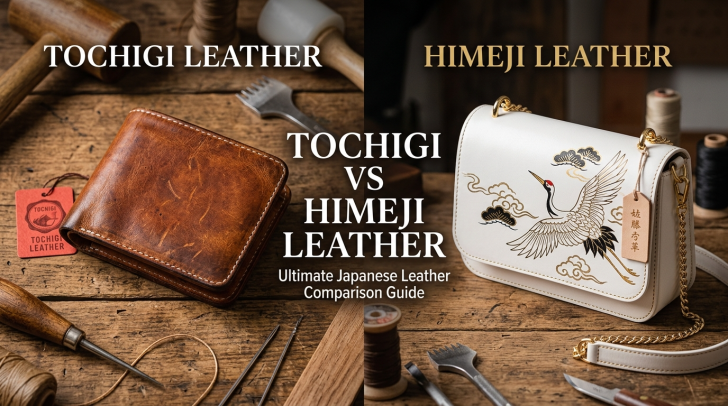
Japan is home to two legendary leather traditions that have earned global admiration from craftsmen and collectors alike — Tochigi Leather and Himeji Leather. Each carries centuries of history, a distinct tanning philosophy, and a character that no factory-made leather can replicate. Whether you’re shopping for your first Japanese leather wallet or looking to deepen your knowledge before a serious purchase, this guide covers everything you need to know.
From the 160 pit tanks of Tochigi Prefecture to the ancient Ichikawa River banks of Hyogo, these two leathers represent the pinnacle of Japanese craftsmanship — yet they are strikingly different in origin, process, feel, and purpose. Let’s explore both, compare them head-to-head, and help you decide which tradition is right for you.
Table of Contents
- What Is Tochigi Leather?
- What Is Himeji Leather?
- Tanning Process: A Side-by-Side Comparison
- Look, Feel & Aging: What to Expect
- Real-World Photos: Aging in Action
- Best Products Made from Each Leather
- How to Care for Each Leather
- Which Is Right for You?
- Recommended Products to Buy
- FAQ
What Is Tochigi Leather?
Tochigi Leather (栃木レザー) is produced by Tochigi Leather Co., Ltd., a single tannery founded in 1945 and located in Tochigi Prefecture, north of Tokyo. What makes this leather extraordinary is its commitment to 100% natural vegetable tanning — a process free from synthetic chemicals, using only plant-derived tannins extracted from the mimosa tree of Brazil.
The tannery operates 160 pit tanks, each filled with progressively stronger tannin solutions. Hides are slowly moved from tank to tank over a period of approximately 20 days, allowing the tannins to penetrate deep into every fiber of the leather. This unhurried, labor-intensive method is why Tochigi leather represents less than 10% of leather produced worldwide.
🏷️ The Red Tag: Every authentic piece of Tochigi leather is certified with a distinctive red tag attached to the product. This tag is your guarantee of provenance and quality — a badge of honor among leather enthusiasts worldwide.
Key Characteristics of Tochigi Leather
Tochigi leather starts firm and slightly stiff — a hallmark of its natural, uncoated finish. But over weeks and months of use, it softens beautifully, molding itself to the owner’s habits and body. A wallet made from Tochigi leather gradually conforms to your pocket; a belt shapes itself to your waist. This “breaking in” process is part of the joy of ownership.
One of the most celebrated traits of Tochigi leather is how it develops a rich patina over time. The natural pigments deepen, the surface takes on a warm luster, and the leather tells the story of its owner. Japanese artisans call this “leather that grows with people” (人と共に育つ革). A well-loved Tochigi wallet achieves a vintage look that money simply cannot buy — it has to be earned through years of use.
What Is Himeji Leather?
Himeji Leather (姫路レザー) is not a single brand — it is a regional designation for all leather produced in and around Himeji City in Hyogo Prefecture, western Japan. Himeji’s tanning heritage stretches back over 1,000 years, making it one of the oldest continuous leather-producing regions on earth. The city’s location — near the Ichikawa River, with a mild, dry climate and access to Seto Inland Sea salt — made it a natural center for leather craft.
The most iconic product of Himeji is shirogawa (白革) — “white leather.” This extraordinary material is produced using the ancient Hon-Nameshi method: raw hides are soaked in the Ichikawa River, then worked by hand with salt, rapeseed oil, and river water alone. No synthetic chemicals. The result is a luminous, milky-white leather that actually becomes whiter when exposed to sunlight — a property found in no other leather in the world.
⚔️ Samurai Heritage: During Japan’s feudal era, Himeji’s white leather was the material of choice for samurai armor. Its ability to withstand wear while remaining lightweight and flexible made it ideal for warriors who needed protection without sacrificing mobility. Today, it graces luxury handbags and designer goods.
Modern Himeji leather encompasses a wider spectrum than just white leather. The region also produces Himeji Kurozan Leather — a black lacquer-coated leather perfected by Sakamoto Shoten (est. 1923), which has gained acclaim in the European fashion industry. Many Himeji tanneries use a combination of chrome and vegetable tanning, though the traditional white-tanning method remains the region’s most prized heritage technique.
Key Characteristics of Himeji Leather
Traditional Himeji white leather is soft, supple, and surprisingly lightweight — qualities that come directly from the slow, chemical-free tanning process that takes two to four months. The surface develops a subtle patina of ivory with use, and craftsmen often apply lacquer as a final step, which creates the characteristic hand-painted look of Himeji craft goods. Chrome-tanned Himeji leather, by contrast, is more resistant to moisture and aging, making it a practical choice for everyday items like shoes and belts.

Tanning Process: A Side-by-Side Comparison
The difference between these two leathers begins — and largely ends — in the tanning method. Understanding this distinction is the key to understanding everything else about their properties, aging behavior, and care requirements.
| Tochigi Leather | Himeji Leather | |
|---|---|---|
| Location | Tochigi Prefecture, Kanto | Himeji City, Hyogo Prefecture |
| History | Founded 1945 (brand); traditional veg-tan for decades | Over 1,000 years of continuous production |
| Tanning Method | 100% vegetable tanning (mimosa tannin, 160 pit tanks) | Traditional white tanning (Hon-Nameshi), chrome, or combination |
| Duration | ~20 days in tannin pits | 2–4 months (traditional white tanning) |
| Chemicals Used | None — 100% natural | None (traditional); chromium sulfate (modern variants) |
| Patina / Aging | Develops rich amber/brown patina with use | White leather develops ivory patina; chrome-tanned resists aging |
| Texture | Firm initially, softens with use; lightly textured grain | Soft and supple; smooth and lustrous |
| Water Resistance | Low (sensitive to moisture initially) | Higher (especially chrome-tanned variants) |
| Best For | Wallets, belts, watch straps, bags — items you carry daily | Bags, armor, luxury accessories, shoes, craft goods |
| Sustainability | Highly sustainable; wastewater recycled as fertilizer | Traditional method highly sustainable; modern variants vary |
Look, Feel & Aging: What to Expect
Tochigi Leather: The Patina Champion
If you’re a leather enthusiast who loves watching a material evolve, Tochigi leather is the gold standard. When you first purchase a Tochigi leather product, you’ll notice a slightly stiff, matte surface with the clean grain of full-grain cowhide. There may be natural variations in color, minor surface marks, and grain differences — these are not defects, but proof of the leather’s natural origins.
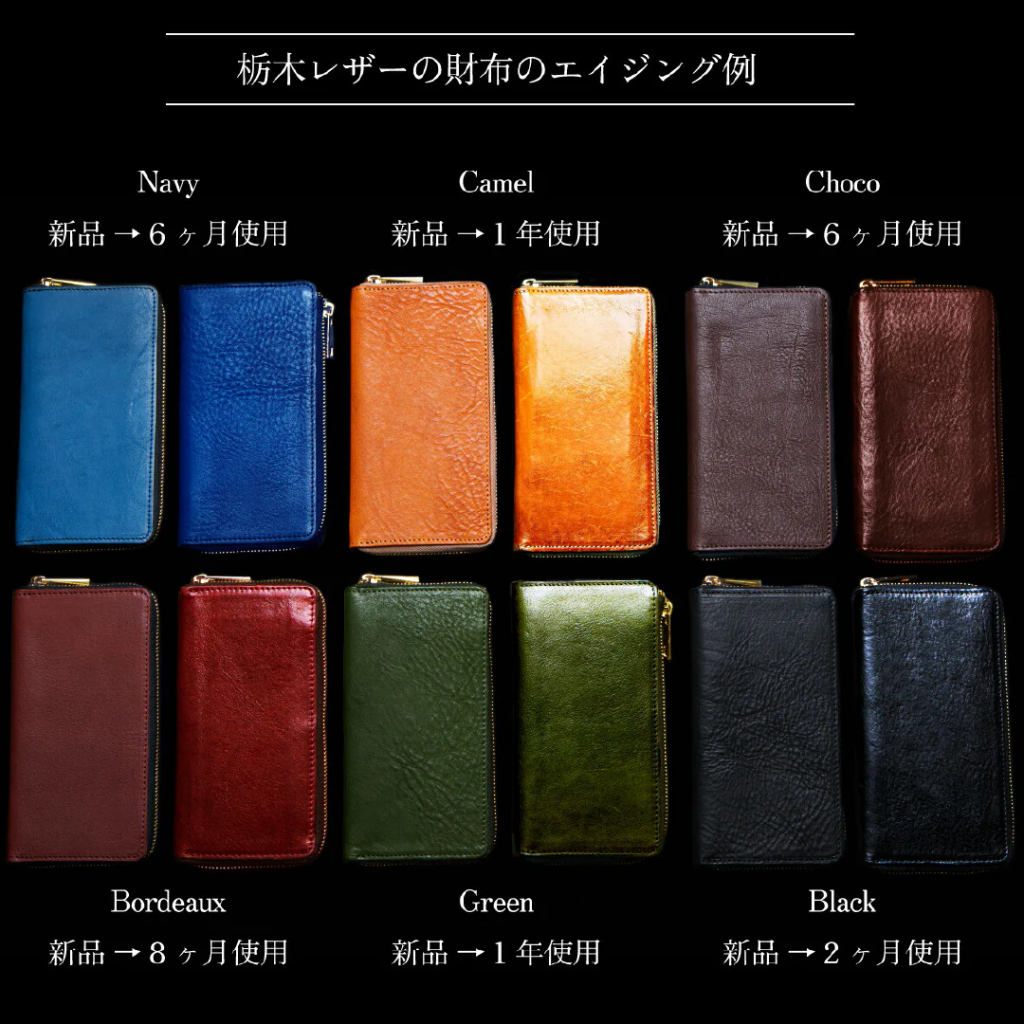
Over the following weeks, the oils from your hands begin to condition the leather. Within six months of regular use, the surface starts to deepen in color and develop a gentle sheen. After a year, a true patina becomes visible — richer tones, smoother areas at contact points, a warm amber glow in natural tans. The longer you use it, the more unique and irreplaceable your piece becomes.
⏱️ Aging Timeline: 0–2 months: Slight softening and initial luster. 6 months: Noticeable color deepening and patina begins. 1–2 years: Rich, deep patina unique to the owner. 5+ years: Heirloom-quality character that no new leather can match.
Himeji Leather: Elegance with Historical Weight
Traditional Himeji white leather (shirogawa) presents a unique aging story. Unlike most leathers that darken with age, authentic Himeji white leather can actually become brighter white when exposed to sunlight. Over time, and with the application of lacquer in traditional craft pieces, it develops a subtle ivory sheen that signals age and quality. Chrome-tanned Himeji leather, by contrast, ages more slowly and maintains its shape and color with minimal maintenance — a practical advantage for everyday items.
The hand-painted designs common in Himeji leather craft — flowers, cranes, geometric patterns — are applied over the white base and then sealed with lacquer, resulting in pieces that are as much art as accessory. Each piece is genuinely unique; no two hand-painted bags are alike.
Real-World Photos: Aging in Action
Seeing is believing. Here are real-world examples of how these leathers age from multiple sources:
📸 Tochigi Leather: Before & After 2 Months of Use
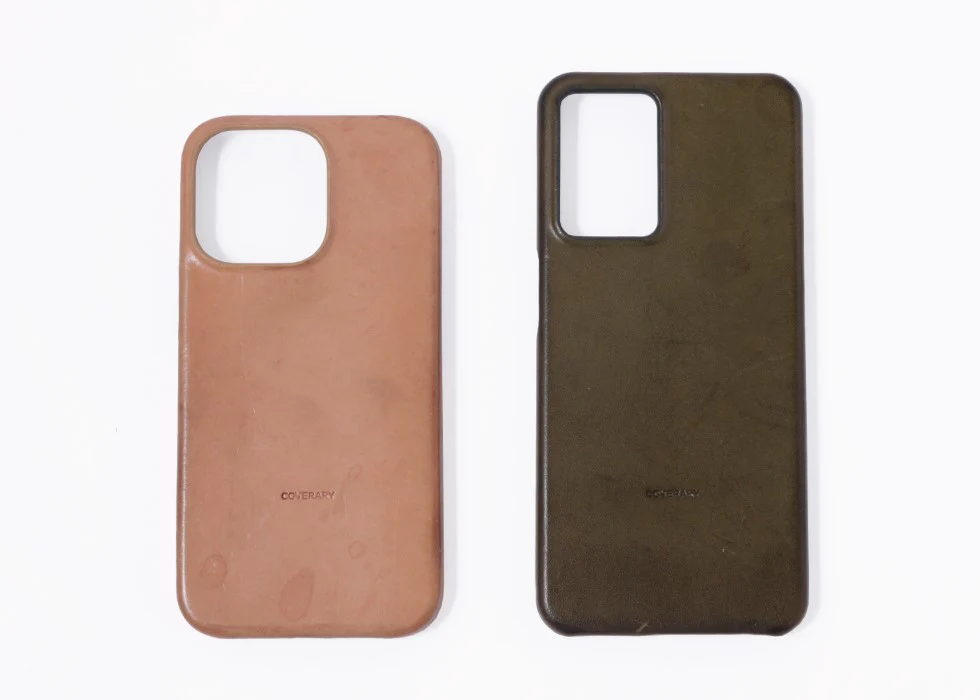
The COVERARY team documented the aging of Tochigi leather phone cases over two months of everyday carry — specifically starting with a natural tan and a green color. Even without dedicated care, both pieces developed visible luster and deepened color, demonstrating how body oils and UV exposure accelerate patina formation.
 — 引用: COVERARY(coverary.com)
The COVERARY aging article notes: both natural tan and green Tochigi leather cases showed clear luster that could be seen at a glance, and colors deepened significantly — the result of UV rays and skin oils absorbed during daily handling. Even minor scratches contribute to the vintage aesthetic rather than detracting from it.
📸 Himeji Leather: The Iconic White & Hand-Painted Tradition
Himeji leather’s most distinctive form — the white-tanned himekawa — is showcased beautifully in contemporary handcrafted bags from AMASOUK, a brand that sources leather from a century-old tannery in Himeji. Their pieces reflect the traditional craft: origami-inspired silhouettes, pit-tanned leather, and the enduring character of chemical-free Japanese tanning.
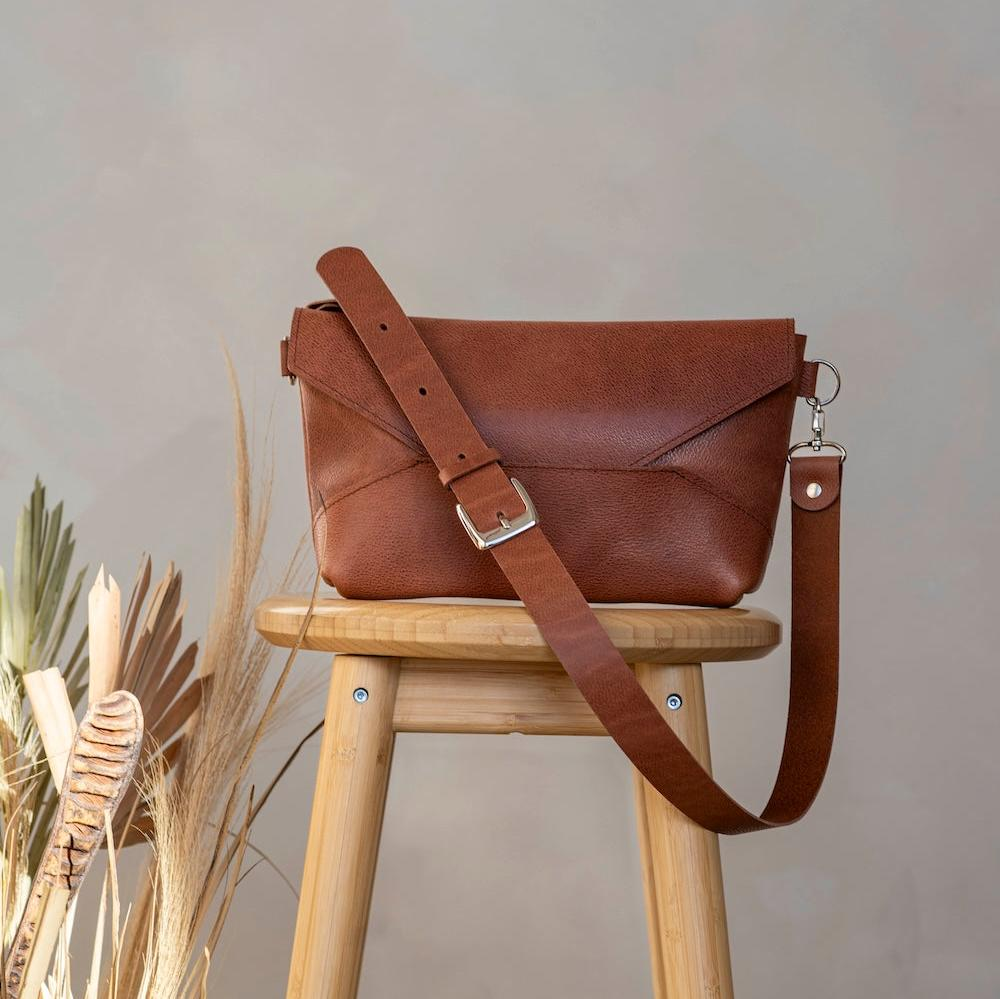
 AMASOUK Himeji leather Kami Shoulder Bag origami inspired designHimeji veg-tanned leather Kami Shoulder Bag — origami-inspired design from a 100-year-old Himeji tannery — 引用: AMASOUK(amasouk.com)
📸 Tochigi Leather: Long-Term Aging (2 Years of Daily Use)
Japan Factory / Hallelujah Leather documented a natural camel-colored Tochigi leather tote bag used daily for two years. The color transformation was remarkable — what started as a light, sandy beige had deepened into a rich, warm amber with a polished surface. The leather hadn’t stretched or warped; it had simply become more beautiful with time.
Best Products Made from Each Leather
Tochigi Leather — What It Excels At
Tochigi leather’s combination of firm structure, fiber density, and patina potential makes it ideal for items you carry and handle every single day. Its typical tanning thickness of 2.3–2.5mm (with heavier grades up to 4mm) gives it excellent structure without brittleness. The most popular Tochigi leather products include:
- Bifold and trifold wallets — the most popular format; the leather molds to your pocket over time
- Long wallets with zip — structured yet softens gracefully with daily use
- Watch straps — made famous by brands like Knot; tapered shape suits all occasions
- Tote bags and shoulder bags — develop stunning patina over months of carry
- Belts — the dense fiber holds shape for years; aging along wear areas looks beautiful
- Key cases and card holders — compact pieces that develop character quickly
- Smartphone cases — a modern application that ages uniquely with everyday handling
Himeji Leather — What It Excels At
Himeji leather’s diversity — from delicate white-tanned craft pieces to robust chrome-tanned everyday leather — gives it a wide range of applications:
- Hand-painted craft bags and clutches — the signature Himeji art form; each is a one-of-a-kind piece
- Shoulder bags and crossbody bags — especially from modern brands using veg-tanned Himeji leather
- Men’s dress shoes — Himeji leather is a leading material in Japan’s premium footwear industry
- Belts — the Himeji Tatsuno area supplies a significant portion of Japan’s leather belt market
- Traditional craft goods — boxes, scroll cases, and accessories with traditional Japanese motifs
- Kurozan (black lacquer) leather goods — gaining attention in European fashion circles
How to Care for Each Leather
Caring for Tochigi Leather
Because Tochigi leather is vegetable-tanned with minimal surface treatment, it requires attentive but simple care — especially in the first few months before the leather develops its natural protective oils.
- Apply a waterproof spray before first use. Use a fluorine-based spray (not silicone, which can alter texture). Spray from a distance, let dry, and repeat 2–3 times for best protection.
- Wipe off moisture immediately. Tochigi leather is sensitive to water in its early life. Dab — don’t rub — with a soft dry cloth if it gets wet.
- Wipe down daily. After each use, a quick wipe with a dry cloth removes dust that can trap moisture and cause mold.
- Condition regularly with a vegetable-tanned leather cream. A quality conditioner (like mink oil or beeswax cream) nourishes the leather and maintains suppleness. Apply every 1–3 months depending on use.
- Avoid direct sunlight for storage. While controlled sun exposure deepens patina, prolonged storage in sunlight dries the leather and causes cracking. Store in a breathable dust bag in a ventilated area.
- Embrace the imperfections. Small scratches and marks are part of Tochigi leather’s charm — they contribute to its unique character rather than diminishing it.
Caring for Himeji Leather
Care requirements for Himeji leather depend on the tanning method of your specific piece. Traditional white-tanned Himeji leather is especially delicate:
- Wipe with a soft, dry cloth to remove dirt. Avoid abrasive materials that could scratch the surface or disturb hand-painted designs.
- Apply a neutral leather conditioner twice a year to keep the leather supple and help repel dirt, while still allowing natural aging.
- Avoid prolonged direct sun or extreme heat — these will dry out the leather more quickly. Brief sun exposure is actually beneficial for white-tanned leather (it brightens), but controlled.
- For chrome-tanned Himeji leather goods (shoes, belts): use a matching shoe cream or leather cream appropriate to the color; polish regularly for dress items.
- Handle hand-painted pieces with care — the lacquer seal is durable but can crack if the leather is folded sharply or repeatedly.
Which Is Right for You?
Both traditions represent the finest leather Japan has to offer, but they serve different types of buyers. Here’s a simple guide:
🟣 Choose Tochigi Leather if you:
• Love the idea of leather that improves with age and develops a unique personal patina
• Want an everyday carry item (wallet, belt, watch strap) that becomes more beautiful with daily use
• Prefer 100% natural, chemical-free materials and sustainable manufacturing
• Are a leather enthusiast who appreciates the craft of vegetable tanning
• Want to invest in a piece that could last decades or become an heirloom
🔵 Choose Himeji Leather if you:
• Are drawn to the unique history and cultural significance of Japan’s oldest leather tradition
• Want a statement piece — such as a hand-painted bag — that is genuinely one of a kind
• Prefer leather that is softer and more moisture-resistant from day one (chrome-tanned variants)
• Are looking for premium dress shoes or belts where shape retention is more important than patina
• Value the connection to Japanese samurai culture and 1,000 years of craft heritage
Recommended Products to Buy
🛒 Tochigi Leather Products
The following products are crafted from authentic Tochigi Leather and are available internationally. Look for the red tag as a mark of quality:
- Luminio Tochigi Leather Trifold Wallet (lusl20225) — Made in Japan, available in 6 colors including brown, navy, and khaki. Features 3 card slots and 2 bill compartments. A best-selling compact design.
- Tachiya Tochigi Leather Bifold Wallet (Small) — Minimalist bifold with a clean, slim profile. Ideal first Tochigi leather purchase for those new to the tradition.
- COVERARY Tochigi Leather Smartphone Case — Hands-on everyday use accelerates beautiful patina. Available for iPhone and Android series.
- Knot Tochigi Leather Traditional Shape Watch Strap — The most well-known Tochigi leather strap brand in Japan; tapered design suits casual to formal wear.
🛒 Himeji Leather Products
- AMASOUK Kami Shoulder Bag — Origami-inspired silhouette in pit-tanned Himeji veg leather. Sourced from a 100-year-old tannery. Water-resistant treatment applied. Detachable shoulder strap.
- AMASOUK Origami Card Holder — Compact, elegant, and uniquely Japanese in design. Veg-tanned and pit-tanned Himeji leather. Perfect paired gift item.
- Knot Himeji Kurozan Leather Watch Strap — Black lacquer-finished leather by Sakamoto Shoten (est. 1923), the only workshop in Japan overseeing the entire process from tanning to lacquer coating.
Frequently Asked Questions (FAQ)
Is Tochigi Leather better than Himeji Leather?
Neither is objectively “better” — they serve different purposes and embody different leather philosophies. Tochigi Leather excels for everyday carry items that you want to develop a personal patina over years. Himeji Leather offers a broader spectrum, from the world’s only naturally white leather to durable chrome-tanned goods. Both represent the highest standards of Japanese leather craftsmanship.
How do I know if a product uses genuine Tochigi Leather?
Authentic Tochigi Leather products come with a distinctive red certification tag attached by Tochigi Leather Co., Ltd. This tag is the company’s guarantee of quality and origin. Some products also include a certificate card for limited-edition leathers. Always purchase from reputable retailers and look for the red tag in product photos.
Can I use regular leather conditioner on Tochigi Leather?
Yes, but choose carefully. Creams made specifically for vegetable-tanned leather are best — look for products containing beeswax, lanolin, or mink oil. Avoid conditioners with silicone, as these can coat the leather and prevent the natural patina development that makes Tochigi leather special. Avoid petroleum-based products entirely.
Why is Himeji white leather white?
Himeji white leather (shirogawa) gets its unique color from the traditional Hon-Nameshi tanning process, which uses only river water, salt, and rapeseed oil — no dyes, bleaches, or chemical treatments. The natural interaction of these simple ingredients with cowhide produces a milky white color that actually brightens when exposed to sunlight, rather than darkening as dyed leathers do. This property has been prized in Japan for over 1,000 years.
Is vegetable-tanned leather more sustainable than chrome-tanned leather?
Generally, yes. Vegetable tanning uses plant-derived tannins and avoids heavy metals like chromium. Tochigi Leather goes further by operating an advanced water treatment facility that purifies all wastewater before release, and repurposes the remaining sludge as organic fertilizer. That said, sustainable practices vary widely among tanneries — always research the specific brand and manufacturer.
How long does a Tochigi Leather wallet last?
With proper care, a Tochigi Leather wallet can last 10 to 30 years or more. The vegetable-tanned construction creates leather with exceptional fiber integrity — it doesn’t peel, crack under normal use, or lose its structure. Many owners keep their Tochigi leather wallets for a lifetime and pass them on as heirlooms. The patina that develops over decades only adds to the value and beauty of the piece.
Where can I buy authentic Himeji Leather products internationally?
International buyers have several options. AMASOUK offers a curated selection of Himeji leather bags handcrafted at a century-old Himeji tannery and ships globally. Maker’s Watch Knot offers Himeji Kurozan leather watch straps with international shipping. The Visit Himeji official tourism site also lists local leather goods producers for those planning a trip to Japan.
📚 Related Articles
・Shell Cordovan from Japan: Shinki Hikaku
・Visiting Japan’s Leather Districts
・Why Japanese Leather Is Different
Further Reading & Official Resources:
• Japan Leather Guide — Tochigi Leather
• Japan Leather Guide — Himeji Leather
• Tochigi Leather Co., Ltd. Official Website
• Visit Himeji — Leather Products Guide
• JTCO — Himeji White Tanned Leather Craft
ARTICLE_END
▶ Related: The Beginner’s Guide to Buying Japanese Leather Goods
▶ Related: Shell Cordovan from Japan: Shinki Hikaku
▶ Related: Why Japanese Leather Is Different
▶ Related: The Beginner’s Guide to Buying Japanese Leather Goods
▶ Related: Shell Cordovan from Japan: Shinki Hikaku
▶ Related: Why Japanese Leather Is Different
▎ Leather Note Shop からのお知らせ
本革の革製品を扱う公式ショップ、はじめました
Leather Noteの姉妹サイトとして、本革のみにこだわった革製品を扱うオンラインショップを開設しました。情報サイトとあわせて、ぜひ覗きに来てください。
「こういう革製品が欲しい」というご要望はぜひ 商品リクエストフォーム へ。皆さまの声を企画の参考にしています。