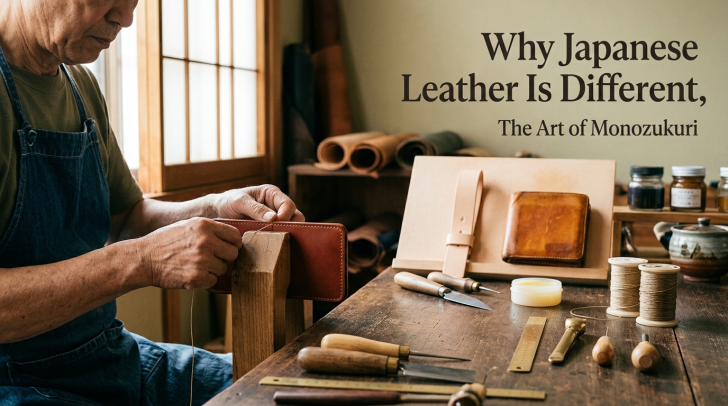
Walk into any leather atelier in Tokyo and you sense it immediately — an unhurried quiet, the faint scent of natural tannins, and craftsmen who work without rushing. That atmosphere has a name: monozukuri (物作り). It is the invisible thread stitched into every Japanese leather product, and once you understand it, you will never look at a wallet or bag the same way again.
This article explores what monozukuri really means, how it shapes the way Japanese artisans select materials and finish edges, and why — across a world of mass-produced accessories — Japanese leather goods have earned a quiet, devoted global following.
Whether you are considering your first Japanese leather purchase or are already a devoted collector, understanding the philosophy will deepen your appreciation of every scratch, every patina, every stitch.
Table of Contents
- What Is Monozukuri? The Philosophy Explained
- The Cultural Roots: Zen, Shinto, and the Way of Making
- How Monozukuri Shapes Japanese Leather Craftsmanship
- Wabi-Sabi and the Beauty of Aging Leather
- Three Japanese Leather Brands That Embody the Philosophy
- The Patina Journey: What to Expect Over Time
- Japanese Leather vs. European Leather: Key Differences
- How to Care for Your Japanese Leather Goods
- Recommended Products (Amazon & Rakuten)
- FAQ
What Is Monozukuri? The Philosophy Explained
The Japanese word monozukuri (ものづくり) combines mono (thing) and zukuri (the act of making). Literally: “making things.” But translating it that simply is like saying the tea ceremony is just about drinking tea.
Monozukuri is a mindset, a spirit, a philosophy. It describes a way of approaching creation in which pride in the work, responsibility toward the material, and dedication to the process come before speed, profit, or trendiness. For a Japanese artisan working with leather, it means they do not merely produce an item — they guide each hide from raw material to finished piece, remaining fully present at every stage.
The concept rose to wider prominence in 1999 when the Japanese government passed the Basic Act on the Promotion of Core Manufacturing Technology, formally embedding monozukuri into national industrial policy. But the underlying values had been practiced for over a thousand years, traced back to the craft workshops that grew around Kyoto after it became Japan’s capital in 794 AD.
Unlike the English word “craftsmanship,” which places emphasis on the craftsman and their personal skill, monozukuri emphasizes the thing being made. The artisan steps back; the object comes forward. This subtle shift in focus produces something remarkable: goods built not to showcase the maker’s ego, but to serve the owner — beautifully and indefinitely.
“Monozukuri is so much more than creating products. If monozukuri was simply creation, then music would be nothing more than nice sounds, and a picture would be only a bunch of pretty colors.”
— AllAboutLean.com
The Cultural Roots: Zen, Shinto, and the Way of Making
Monozukuri did not emerge from a vacuum. It has two deep cultural roots: Zen Buddhism and Shintoism.
Zen Buddhism emphasizes mindfulness, discipline, and the pursuit of perfection. A Zen-influenced artisan brings their full, undivided attention to every cut of leather and every pass of the needle. There is no multitasking. There is no acceptable “good enough.” The present moment — and only the present moment — determines the quality of what is made.
Shintoism, Japan’s indigenous spiritual tradition, teaches that natural elements contain spirits (kami). For a leather craftsman rooted in this worldview, the hide in their hands was once a living thing. It deserves respect. It should be worked with care, not cut carelessly or wasted. This reverence for material is not performative — it is built into the workflow itself.
Together, these influences produce the three eliminations of traditional Japanese craft — a principle called removing the “3 Mus”:
- Muri — eliminating unnecessary or unreasonable effort
- Muda — eliminating waste in any form
- Mura — eliminating inconsistency in the process
Walk through a Japanese leather workshop and you see this in practice: every tool has a place, every movement is deliberate, and every piece is checked at multiple stages — not by a quality-control department, but by the craftsman themselves, whose personal reputation is bound to the work.
Apprenticeship is also central. In Japan, a trainee (minarai) does not sit through lectures. They watch. They repeat. They gradually earn the right to handle more complex tasks. The master rarely explains — the apprentice must “steal the art,” observing and internalizing techniques over years. This slow transmission is why Japanese leather techniques carry centuries of accumulated refinement rather than just a few decades of instruction.
How Monozukuri Shapes Japanese Leather Craftsmanship
So how does an abstract philosophy translate into physical leather goods? In concrete, observable ways — from material selection through to the final burnish.
1. Material Selection Is Non-Negotiable
Japanese leather artisans source from the finest tanneries in the world — often choosing full-grain, vegetable-tanned leather that ages gracefully rather than cheaper chrome-tanned alternatives. The distinction matters enormously: vegetable-tanned leather is produced using natural tannins from tree bark, leaves, and roots. It takes longer to produce, costs more, and requires more skill to work with. But it is also the foundation of a rich patina, a leather that — as the Japanese would say — gets better with life.
Many brands also use Himeji leather (sometimes called Hyogo or Japanese white leather), a regionally specific product tanned using the traditional Hon-Nameshi process: hides are soaked in the local river water, then tanned using canola oil and salt — often processed by hand. The result is a uniquely soft, supple leather with a clean natural tone that has been prized in Japan for centuries.
2. Precision Handwork at Every Stage
In a monozukuri-aligned workshop, leather goods pass through multiple hands-on stages:
- Cutting — done by eye and experience, not just templates, to optimize each hide
- Skiving — thinning edges to precise thicknesses so pieces fold and layer cleanly
- Hand stitching — using saddle stitch technique with waxed linen or polyester thread, which locks stitches individually (machine stitching unravels from a single break; saddle stitching does not)
- Edge burnishing — polishing cut edges by hand, often multiple times, until they achieve a smooth, sealed finish that prevents fraying and absorbs conditioning
- Finishing — conditioning, pressing, and final inspection
At GANZO — one of Japan’s most respected leather brands — this process is articulated as “7QS” (Seven Qualities): material, cutting, skiving, sewing, edge folding, burnishing, and finishing. Every single step has defined standards. Every single step is checked.
3. One Maker, One Order
Many Japanese workshops — particularly HERZ in Tokyo — follow a principle where one craftsman handles an order from start to finish. This is not efficient by industrial standards. It is intentional. The maker’s skill, attention, and even their state of mind on that day become embedded in the finished object. No two pieces are identical. Each carries a quiet human signature.
This philosophy results in goods that feel fundamentally different in the hand from mass-produced counterparts — not because of branding or price, but because of presence.
Wabi-Sabi and the Beauty of Aging Leather
Alongside monozukuri, there is a second Japanese concept that is inseparable from Japanese leather culture: wabi-sabi (侘寂).
Wabi-sabi is the art of finding beauty in imperfection, transience, and the natural aging of things. A weathered stone. A cracked tea bowl repaired with gold (kintsugi). A leather wallet that has developed its own character after years of daily use.
In the context of leather goods, wabi-sabi means:
- Natural marks and wrinkles in the hide are not defects — they are character. Blood vessel traces, grain variations, slight color differences between panels: these are celebrated as evidence of authentic, natural material.
- Scratches accumulate into a story. The mark from a key, the edge darkened by your thumb — each becomes part of the object’s biography.
- Aging is the point, not the problem. A Japanese leather product is designed to look its best not on the day of purchase, but after years of use.
This is a fundamentally different relationship with objects than most Western consumption culture encourages. Rather than replacing goods when they show wear, the Japanese leather tradition invites you to grow with the object — to participate in its transformation.
Three Japanese Leather Brands That Embody the Philosophy
🟤 GANZO — The Wallet Specialists of Omotesando
Founded in 1917 and based in Tokyo, GANZO is arguably Japan’s most internationally recognized premium leather brand. Their name comes from a Florentine Italian slang word for “excellent” — and the products justify it.
GANZO is a wallet specialist first and foremost — not a fashion house that makes wallets on the side. This singular focus allows their artisans to develop extraordinary precision. Every stage follows a bespoke process: concept, design, cutting, skiving, stitching, edge burnishing, and finishing — all done in-house at their Tokyo workshop. Their open-studio format means you can watch craftspeople working while you shop.
The brand works with exceptional leathers from around the world: shell cordovan from Japan and Italy, bridle leather from J&E Sedgwick (UK), Minerva Box from Badalassi Carlo (Italy), and their own Hida cow leather from Japan’s Gifu prefecture. The 7QS series explicitly names all seven crafting stages as quality commitments. Their cordovan line, finished with an aniline water-dyeing process developed by LEDER OGAWA, develops a transparency and luster over time that becomes genuinely breathtaking.
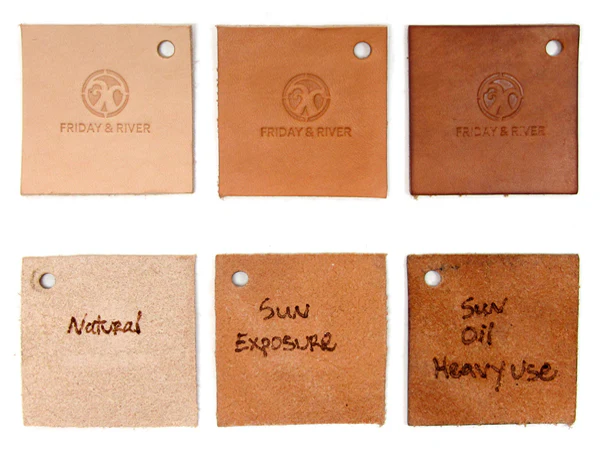
GANZO also displays “aged samples” of their leathers in-store alongside new ones — so customers can see exactly what a purchase will look like after two, five, or ten years. Few brands anywhere in the world do this. It is pure monozukuri: total confidence in the product’s future.
Official site: ganzo-jp.com (English available)
🟠 HERZ — One Person, One Bag, Made to Order
HERZ has been operating since 1973, with workshops and retail stores in Shibuya (Tokyo), Osaka, Hakata, and Sendai. Their philosophy is captured in a single phrase: “one person, one order at a time.”
Everything at HERZ — from cutting through to final sewing — is handled by a single craftsperson for each order. The result is a level of consistency and personal investment that factory production simply cannot replicate. HERZ uses full-grain, vegetable-tanned leather as standard, embracing all of the hide’s natural marks: blood vessel traces, slight color variations, surface scars. These are not corrected. They are featured.
The brand’s design language is functional and unassuming — bags that are easy to hold, easy to use, timeless, and durable. In an age of logo-heavy fashion, HERZ lets the leather speak. And after a year or two of daily use, vegetable-tanned HERZ leather speaks very loudly — in rich amber and chocolate tones, softened grain, and a surface that tells exactly where it has been.
Official site: herz-bag.jp/en
🟡 Tsuchiya Kaban — Quiet Luxury Since 1965
Tsuchiya Kaban began as a maker of Japan’s iconic school randoseru backpacks and has expanded over 50+ years into one of the country’s most trusted leather goods houses. Their approach mirrors GANZO’s in its commitment to natural materials and aging, but with a softer, more approachable feel — the leather is immediately supple, the designs understated and classic.
What Tsuchiya Kaban does exceptionally well is hold to standards over a very long period. Their artisans train for years before handling finished goods. Each piece is checked against the brand’s precise standards before it leaves the workshop. And in a global market where “luxury” often means logo and price tag rather than craft, Tsuchiya Kaban maintains that true value lies in longevity, not trend cycles.
Official site: tsuchiya-kaban.com (ships internationally)
The Patina Journey: What to Expect Over Time
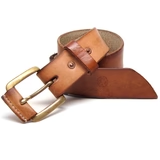
One of the most distinctive features of Japanese-style vegetable-tanned leather goods is the patina they develop with use. Unlike chrome-tanned leather that gradually breaks down, high-quality vegetable-tanned leather becomes more beautiful with age — deepening in color, developing a subtle sheen, and conforming to its owner’s daily habits.
Here is what the patina journey typically looks like:
| Timeframe | What Happens |
|---|---|
| Day 1 | Clean, uniform surface; firm texture; natural or lightly dyed color |
| 1–3 months | First signs of darkening where hands grip most; slight surface softening |
| 6 months | Noticeable color deepening, especially at edges and corners; grain definition grows |
| 1 year | Rich tone across the surface; soft sheen in high-contact areas; texture becomes personal |
| 3–5 years | Deep, complex color; strong character; unmistakably aged in the best possible sense |
Factors that influence how quickly patina develops:
- Daily use — friction from pockets, hands, and surfaces accelerates the process
- Sunlight exposure — UV rays darken the leather naturally, similar to skin tanning
- Natural oils from your hands — these transfer to the leather and feed the patina
- Climate and humidity — mild moisture (including light rain) contributes to the character
- Conditioning — occasional conditioning with a quality leather balm maintains suppleness
No two pieces develop identically. That is the point. Your leather good becomes uniquely yours — a record of your lifestyle, your travels, your days.
Japanese Leather vs. European Leather: Key Differences
Both Japan and Europe (particularly Italy and France) produce world-class leather goods. But there are meaningful philosophical and practical differences between the traditions:
| Japanese Leather | European Leather | |
|---|---|---|
| Design philosophy | Function-first, understated, minimalist | Often fashion-forward, logo-conscious |
| Primary value | Longevity and aging beauty | Heritage prestige and aesthetic impact |
| Typical materials | Full-grain veg-tan, Himeji leather, cordovan | Calf, lambskin, Saffiano, exotic leathers |
| Production approach | One craftsman per item, extensive handwork | Varies — ateliers to large factories |
| Edge finishing | Hand-burnished, sealed, polished repeatedly | Ranges from painted edges to heat finishing |
| Relationship with aging | Aging is celebrated — wabi-sabi | Often sealed to minimize visible aging |
It is not that one tradition is superior. They are built for different relationships with objects. European luxury leather is often about immediate impact — presence and status. Japanese leather is about a relationship that deepens over time.
How to Care for Your Japanese Leather Goods
Japanese vegetable-tanned leather is robust, but it rewards attentive owners. Here are the essential care principles:
✅ Do
- Use it daily. Consistent use and contact with your hands is the best conditioning there is.
- Condition occasionally with a natural leather balm or conditioner — 2–4 times per year is usually sufficient.
- Allow light sun exposure occasionally (a few hours) to encourage even darkening across the surface.
- Wipe dry immediately if the leather gets wet. Let it air dry naturally away from heat.
- Store properly — in a breathable cloth bag, away from plastic and damp environments.
❌ Avoid
- Over-conditioning (it can weaken the leather’s structure)
- Direct heat for drying (radiators, hair dryers)
- Harsh chemicals or alcohol-based cleaners
- Prolonged storage in plastic bags (leather needs to breathe)
- Extended soaking in water
For shell cordovan specifically (used in many GANZO products), a horsehair brush and a light application of cordovan cream will maintain the characteristic mirror-like depth of finish.
Recommended Products
If you are ready to experience Japanese leather craftsmanship firsthand, here are some starting points across a range of budgets. Note that product availability and pricing change frequently — always check the current listings for the most up-to-date information.
GANZO Products
- GANZO THIN BRIDLE Bifold Wallet — Search: Amazon Japan (GANZO THIN BRIDLE) | Rakuten (GANZO THIN BRIDLE)
- GANZO CORDOVAN Long Wallet — Search: Amazon Japan (GANZO CORDOVAN) | Rakuten (GANZO コードバン)
HERZ Products
- HERZ Leather Tote Bag — Search: Amazon Japan (HERZ レザーバッグ) | Rakuten (HERZ レザー)
Tsuchiya Kaban Products
- Tsuchiya Kaban Leather Wallet / Bag — Search: Amazon Japan (土屋鞄) | Rakuten (土屋鞄)
For international shoppers, GANZO and Tsuchiya Kaban both ship overseas from their official websites. HERZ products can also be found on proxy services for global buyers.
Frequently Asked Questions (FAQ)
What does monozukuri mean in simple terms?
Monozukuri (ものづくり) literally means “making things,” but it carries a much deeper meaning: a philosophy of craftsmanship rooted in pride, precision, respect for materials, and continuous improvement. It is a mindset, not just a method.
Why is Japanese leather considered high quality?
Japanese leather goods are known for their meticulous handwork, exceptional material selection (often full-grain vegetable-tanned leather), and attention to finishing details like hand-burnished edges and saddle stitching. The monozukuri philosophy ensures that quality is not a marketing claim — it is embedded in every stage of production.
What is the difference between vegetable-tanned and chrome-tanned leather?
Vegetable-tanned leather uses plant-based tannins and takes weeks to produce. It is firmer, develops a rich patina over time, and is preferred by Japanese artisans. Chrome-tanned leather is produced faster using chromium salts, resulting in a softer, more uniform material that does not age as beautifully. Most Japanese craft leather brands use vegetable tanning.
How long does it take for Japanese leather to develop a patina?
You will notice the first changes within 1–3 months of daily use. By six months, the darkening is clearly visible, especially at edges and high-contact points. After a year, the leather has developed significant character. The process continues throughout the product’s life — which, for well-made Japanese leather goods, can be decades.
Is Japanese leather better than Italian leather?
Both traditions produce exceptional leather goods, but with different philosophies. Italian leather (particularly Florentine vegetable-tanned leather from the Santa Croce region) is known for color richness and suppleness. Japanese leather emphasizes precise handwork, functional design, and aging as a virtue. Many Japanese brands — including GANZO — actually source Italian leathers and apply Japanese craftsmanship to them, creating an interesting fusion.
Can I buy Japanese leather brands outside of Japan?
Yes. GANZO ships internationally from their official website (ganzo-jp.com). Tsuchiya Kaban also has an international store (tsuchiya-kaban.com). HERZ products can be found through Japanese proxy shopping services. Some items are also available through Amazon Japan with international shipping enabled.
What is wabi-sabi and how does it relate to leather?
Wabi-sabi is the Japanese aesthetic of finding beauty in imperfection and transience. In leather, this means celebrating natural marks in the hide, allowing the product to show its age gracefully, and viewing scratches and patina as part of the object’s story rather than flaws to be avoided. It is the philosophical foundation of why Japanese leather goods are designed to look better with age, not worse.
Japanese leather craftsmanship is, at its heart, a counter-argument to disposability. In a world of fast fashion and planned obsolescence, monozukuri asks: what if the object you carry every day was made to last a lifetime — and to tell that lifetime’s story in its grain and patina? That question, stitched into every seam, is what makes Japanese leather different.
📚 Related Articles
・Tochigi vs Himeji Leather
・The Beginner’s Guide to Buying Japanese Leather Goods
・Shell Cordovan from Japan: Shinki Hikaku
▎ 編集部からのお願い
こんな革製品が欲しい、というご要望ありませんか?
Leather Noteでは公式ショップで取り扱う革製品の企画を進めています。「こういうアイテムが本革で欲しい」というアイデアやリクエストがありましたら、ぜひ気軽にお寄せください。
記事の感想やご意見も同フォームから受け付けています。