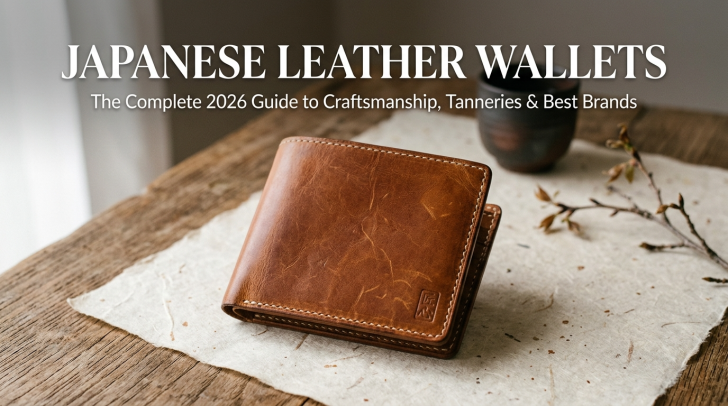
If you’ve ever held a wallet that felt almost alive in your hand—soft, dense, smelling faintly of oiled hide—there’s a good chance it came from Japan. Japanese leather wallets have quietly built a global reputation among collectors, denim enthusiasts, and minimalist gentlemen who value objects that improve with age rather than wear out.
This guide explains everything you need to know in 2026: what makes Japanese leather different, the key tanneries (Tochigi, Himeji, Shinki), the best brands you can actually buy from overseas, how patina develops over years of use, and how to care for your wallet so it ages beautifully. Whether you’re shopping your first piece or your fifth, this is the deep dive you’ve been looking for.
📖 Table of Contents
- Why Japanese Leather Wallets Are Different
- The Big Three: Tochigi, Himeji & Shinki Tanneries
- Best Japanese Leather Wallet Brands in 2026
- How Japanese Leather Develops Patina (With Real Examples)
- Wallet Styles Popular in Japan
- Price Ranges & What to Expect
- Where to Buy Japanese Leather Wallets Internationally
- How to Care for a Japanese Leather Wallet
- Frequently Asked Questions (FAQ)
Why Japanese Leather Wallets Are Different
The short answer: obsessive attention to detail and material honesty. Japanese leather workshops treat a wallet less like a fashion accessory and more like a small piece of architecture. Edges are hand-burnished with wax and bone folders. Stitches are pulled at exactly the same tension across every centimeter. The interior is often as carefully finished as the exterior—something most Western brands quietly skip.
There’s also a cultural philosophy at work. The Japanese aesthetic concept of wabi-sabi—finding beauty in imperfection and age—is built into how these wallets are designed. Scratches, color shifts, and softening of the leather aren’t flaws; they’re considered the visible record of your daily life. A new wallet is supposed to look unfinished compared to a five-year-old one.
Three things separate Japanese leather goods from most mass-market alternatives:
- Vegetable tanning over chrome tanning. Most premium Japanese makers use plant-based tannins (oak, mimosa, chestnut bark), which take weeks instead of hours but produce leather that genuinely ages.
- Single-craftsman production. At brands like HERZ, one artisan makes your entire wallet from start to finish—no assembly line.
- Repair culture. Many Japanese leather houses offer in-house repair for decades after purchase. The wallet is meant to outlive trends.
The Big Three: Tochigi, Himeji & Shinki Tanneries
When you read product descriptions on Japanese leather sites, you’ll see the same tannery names appear over and over. Each has a distinct character, and knowing them helps you choose a wallet that matches the look you want.
🌿 Tochigi Leather (Tochigi Prefecture)
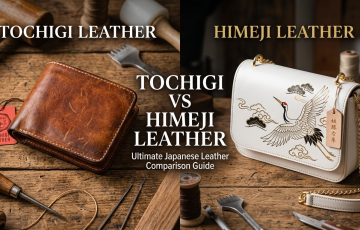
Probably the most internationally recognized Japanese tannery. Tochigi Leather uses a slow vegetable-tanning process with mimosa bark across about 20 stages over roughly 80 days. The result is a firm, smooth hide that ages from a pale honey color into a deep caramel—prized by denim collectors who pair it with raw selvedge jeans.

🌾 Himeji Leather (Hyogo Prefecture)
Himeji has been a leather-tanning city for over a thousand years, with techniques that originally came from neighboring Buddhist communities. Himeji-tanned saddle leathers are softer than Tochigi, with deeper grain growth and a more matte initial finish. They develop patina very quickly—some wallets visibly darken within weeks—making Himeji leather a favorite of leather-aging enthusiasts who post timelines online.
🐎 Shinki Hikaku (Shinki Cordovan)
Shinki Hikaku is one of only a handful of tanneries worldwide producing genuine shell cordovan—the dense, glossy leather cut from the rump of a horse. It takes roughly six months to produce a single piece. Shinki cordovan is what you’ll find on the highest-end Japanese wallets, often costing several times more than standard cowhide. It’s known for an almost mirror-like luster that intensifies as it ages.
Best Japanese Leather Wallet Brands in 2026
You can spend anywhere from $80 to over $2,000 on a Japanese leather wallet. Here are the brands that consistently deliver, broken down by what they do best.
1. GANZO — The Cordovan Master
Founded in 1917, GANZO is widely regarded as Japan’s most refined leather house. They specialize in cordovan and offer three distinct cordovan series sourced from Horween (USA), ROCADO (Italy), and their own water-dyed Japanese cordovan. The bifold and L-zip wallets are signature pieces for working professionals.
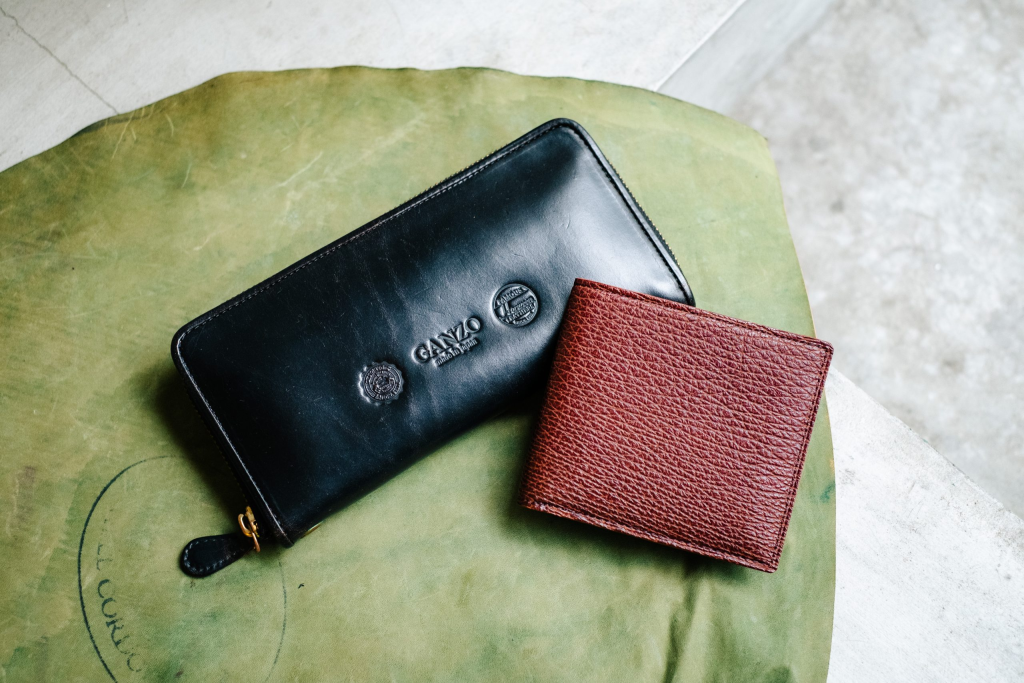
- Available on Amazon Japan: Ganzo Shell Cordovan 2 Bifold Wallet with Coin Purse
- Available on Rakuten Global: GANZO Shell Cordovan 2 Wallet
- Official site: GANZO Official Store
2. Tsuchiya Kaban — Heritage & Repair Service
Tsuchiya Kaban began in 1965 making Japan’s iconic randoseru school backpacks and expanded into wallets and bags. They use a wide range of leathers—Plain Nume (undyed cowhide), Cordovan, Bridle, and Diario (oil mellow steerhide)—and offer a paid repair service available even to global customers, which is rare.
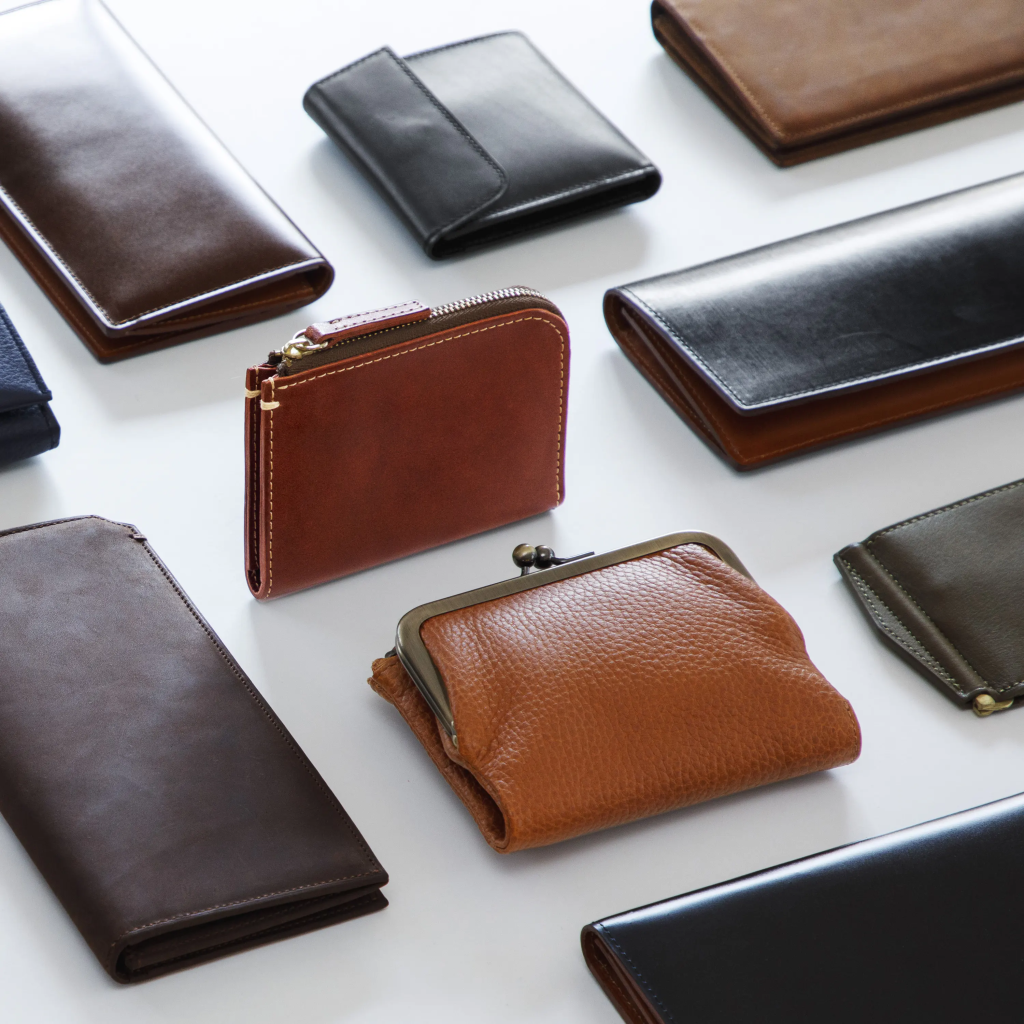
- Best entry point: Diario L Zip Wallet ($174) — minimalist L-shaped zip wallet in oil-mellow steerhide
- For collectors: Cordovan Long Wallet
- Official site: Tsuchiya Kaban Global (ships worldwide, English site available)
3. HERZ — The Single-Craftsman Workshop
HERZ is the brand to look at if you want raw, honest leather. They use thick vegetable-tanned full-grain hides that start out a bright orange-brown and develop dramatically with use. One craftsman builds your wallet from beginning to end. Natural marks—blood vessel lines, light scratches, color variation—are left visible because, in HERZ’s view, they’re proof of authenticity.

4. PORTER (Yoshida & Co.) — Modern Functional
PORTER is more famous for its bags but produces some excellent leather wallets, often in proprietary blends like Dyneema-bonded leather (a hybrid of high-strength fiber and cowhide). PORTER wallets lean modern, lightweight, and minimal—ideal if you want Japanese craftsmanship without the rugged aging look.
5. Other Brands Worth Knowing
- Somes Saddle (Hokkaido) — equestrian saddlery roots, structured leather
- FUJITAKA — since 1941, environmentally conscious, transparent about materials
- Tenjin Works (Tokyo) — natural full vegetable tanned, made-to-order
- Plotter — innovative key wallets and modern minimalist designs
- Postalco — Japan-based with English website, ships worldwide
How Japanese Leather Develops Patina (With Real Examples)
Patina is the gradual surface change that vegetable-tanned full-grain leather develops as it absorbs the oils from your hands, reacts to UV light, and gets compressed by daily use. With Japanese leathers, the change is often dramatic—a wallet that started off pale pink can deepen into a rich, almost burgundy caramel within a year.

The factors that influence how your wallet ages:
- Skin contact — the more you handle it, the faster it darkens
- Sunlight — UV gradually shifts color toward warmer tones
- Pocket friction — back-pocket carry produces a more pronounced sheen
- Conditioning frequency — over-conditioning slows patina; light conditioning every 3–6 months is ideal

Important: patina only develops on full-grain leather. If a product is labeled “genuine leather” or “PU leather,” there is a coating or fiber blend involved, and you’ll get cracking and peeling instead of beautiful aging. This is the single biggest reason to spend a bit more upfront on a Japanese-made wallet.
Wallet Styles Popular in Japan
Unlike many Western markets that have shifted toward minimal cardholders, Japan still uses cash extensively, so wallet design tends to accommodate banknotes and coins. The most common formats are:
- Long Wallet (長財布 / nagazaifu) — flat wallet that holds yen banknotes without folding. Considered more elegant in Japanese business culture.
- Bifold Wallet — the most universal format, especially with a coin pocket
- L-Zip Wallet — compact, with an L-shaped zipper opening; very popular in Japan for its security
- Money Clip with Coin Pouch — a Japanese hybrid for minimalists who still need to carry coins
- Card Case (名刺入れ) — formal business card holder, separate from your money wallet
Price Ranges & What to Expect
| Price Range (USD) | What You Get | Examples |
|---|---|---|
| $70 – $150 | Entry-level Japanese full-grain, simple bifolds, paper-based or canvas hybrids | Plotter, Kamino, basic Postalco |
| $150 – $400 | Premium vegetable-tanned, named tanneries, hand-burnished edges | Tsuchiya Kaban, HERZ, Tenjin Works |
| $400 – $900 | Cordovan, bridle leather, master-craftsman pieces | GANZO Cordovan, Tsuchiya Bridle |
| $900+ | Shinki shell cordovan, custom carved, made-to-order limited editions | Vanitas Japan, custom GANZO orders |
Where to Buy Japanese Leather Wallets Internationally
The biggest hurdle for overseas buyers used to be that most Japanese leather brands ship only domestically. In 2026 that has changed significantly. Here’s where to look:
- Direct international shipping: Tsuchiya Kaban Global, GANZO, Postalco, Kamino
- Rakuten Global Market: wide selection across many brands; English checkout available at global.rakuten.com
- Amazon Japan: ships internationally for many GANZO and PORTER products at amazon.com
- Forwarding services: Buyee, Tenso, ZenMarket — useful for brands that don’t ship abroad directly
- Specialty retailers abroad: Some boutiques in NYC, London, and Berlin stock Japanese brands; check brand websites for stockists
One tip: when buying through Amazon Japan or Rakuten, double-check whether the listing is a verified retailer or a reseller. For high-end items like cordovan wallets, going through the official brand site or Rakuten’s official brand store is safer.
How to Care for a Japanese Leather Wallet
Japanese leather, especially vegetable-tanned types, rewards minimal but consistent care. Don’t over-do it.
- Wipe with a dry, soft cloth weekly to remove dust and skin oils that have built up unevenly.
- Condition every 3–6 months with a small amount of leather balm. A pea-sized drop is enough for an entire bifold. Use products like Saphir Renovateur or a Japanese option like Mowbray Delicate Cream.
- Avoid alcohol-based wipes and hand sanitizer. They strip the natural oils and cause permanent fading.
- Don’t store in plastic. Leather needs to breathe; use the cotton bag the wallet came in or a soft pouch.
- Let it rest. If you carry the same wallet daily, alternating with a second piece extends the life of both significantly.
- Repair, don’t replace. Stitching can be redone, edges re-burnished, and zippers replaced. Brands like GANZO and Tsuchiya Kaban offer repair services for decades after purchase.
Frequently Asked Questions (FAQ)
Are Japanese leather wallets actually worth the price?
If you’re comparing a $250 Japanese vegetable-tanned wallet to a $250 mainstream brand wallet, the answer is almost always yes. The construction quality, leather grade, and longevity tend to be a tier above what major fashion brands offer at the same price. A well-cared-for piece typically lasts 15+ years, sometimes a lifetime.
What’s the difference between Japanese cordovan and American Horween cordovan?
Both are excellent. Horween (Chicago) is generally oilier and warmer-toned; Shinki Hikaku (Japan) tends to be drier, denser, and produces a sharper glaze when polished. GANZO and other top Japanese houses actually use both depending on the series.
Can I buy a Japanese leather wallet without speaking Japanese?
Absolutely. Tsuchiya Kaban, GANZO, Postalco, Kamino, and Amazon Japan all offer English interfaces. Rakuten Global Market also has an English version. The hardest brands to access in English are the small one-craftsman workshops, which is where forwarding services become useful.
How long does it take a Japanese vegetable-tanned wallet to develop patina?
Visible color shifting usually starts within 2–4 weeks of daily use. Significant darkening and surface gloss take 6–12 months. The “deep caramel” look most aging galleries showcase typically takes 2–3 years of regular use.
Is “genuine leather” the same as full-grain Japanese leather?
No. “Genuine leather” is actually a low-grade label in the leather industry, often referring to bonded or split leather with a synthetic coating. Full-grain leather—what reputable Japanese makers use—is the top, uncorrected layer of the hide. It’s the only grade that develops true patina.
Should I get a long wallet or a bifold?
If you live somewhere where you mostly use cards and digital payment, a bifold or L-zip wallet is more practical. If you handle a lot of physical cash, especially yen banknotes that are larger than US dollars, a long wallet keeps bills flat and looks more refined when used in business settings in Japan.
Do Japanese leather wallets have RFID protection?
Most traditional Japanese makers don’t include RFID-blocking material because it conflicts with their material-purity philosophy. If RFID protection is a priority, look at modern brands like PORTER’s hybrid lines or third-party RFID card sleeves you can insert into any wallet.
Final thought: a Japanese leather wallet isn’t an impulse buy—it’s a piece you choose once and live with for years. Take your time, read about the tannery, look at aging galleries from real owners, and pick something whose color and style you’ll still love after it has darkened by 30%. That’s when you know you bought the right one.