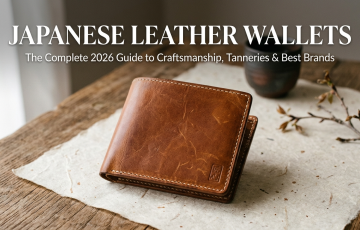
Looking for the best Japanese leather brands in 2026? Japan is home to some of the most respected leather makers in the world — known for vegetable-tanned cowhide, rare cordovan, hand-stitched bags, and a deep philosophy of craftsmanship that values ageing as much as the day you buy. This guide introduces 8 heritage Japanese leather brands trusted by collectors worldwide, what makes each one special, and where you can buy them.
Whether you’re shopping for a wallet that will develop a beautiful patina over 10 years, a briefcase that lasts a lifetime, or a luxury gift made by master artisans, this article will help you find the right Japanese leather brand for you.
- Why Japanese Leather Brands Are Trusted Worldwide
- 1. Tsuchiya Kaban — Tokyo’s Heritage Bag Maker (Since 1965)
- 2. GANZO — The Cordovan Specialist (Since 1917)
- 3. PORTER (Yoshida & Co.) — Japan’s Iconic Bag Brand
- 4. HERZ — Hand-Stitched, Veg-Tanned, Made-to-Order
- 5. SOMES Saddle — Japan’s Only Saddle Maker, Used by the Imperial Household
- 6. FUJITAKA — Innovative Leather Bags Since 1941
- 7. Tenjin Works — Made-to-Order Veg-Tan in Tokyo
- 8. Tochigi Leather — The Tannery Behind Many Brands
- How to Choose a Japanese Leather Brand
- Frequently Asked Questions
Why Japanese Leather Brands Are Trusted Worldwide
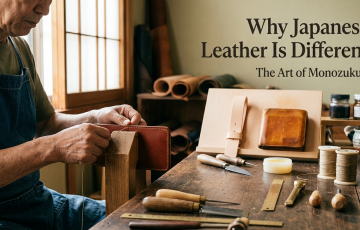
Japanese leather goods are admired internationally for three reasons: obsessive craftsmanship, time-honored tanning techniques, and respect for natural materials. Unlike many mass-produced luxury brands, most Japanese leather makers operate on a small scale, with artisans often taking a single bag or wallet from cutting to finishing themselves.
Another key strength is Japan’s domestic tannery network. Tochigi Leather, Himeji Leather, and Shinki Hikaku are world-class tanneries that supply premium leathers to top brands. Vegetable-tanned cowhide and Japanese cordovan are particularly prized for the way they develop a deep, unique patina with daily use — what Japanese artisans call “leather that grows with people.”
You’ll also notice Japanese brands rarely chase trends. They focus on understated design, repairable construction, and materials that age beautifully — values that align well with today’s slow-fashion movement.
1. Tsuchiya Kaban — Tokyo’s Heritage Bag Maker

Founded: 1965 (Tokyo) | Best for: Wallets, briefcases, randoseru (school backpacks), women’s bags
Tsuchiya Kaban began in 1965 making randoseru, the iconic Japanese school backpack designed to last six years of daily use. From that foundation, the brand has expanded into a full lineup of premium leather wallets, briefcases, totes, and crossbody bags — all handcrafted in Japan by master artisans.
What sets Tsuchiya Kaban apart is the breadth of leathers they work with. Their lineup includes Cordovan, Bridle, Nume (vegetable-tanned cowhide), and a softer “Tone Nume” steerhide that develops a particularly rich patina with use. The brand also offers in-store leather care and lifetime repair services through their in-house craftspeople — a rare commitment in today’s market.
Patina note: Their Tone Nume and Diario steerhide leathers soften with use and develop a glossy, lustrous patina over the years. Many Tsuchiya Kaban customers report their wallets looking better at 5 years than they did new.
Where to buy: Official global site → Tsuchiya Kaban Global (ships internationally)
Recommended product: “Tsuchiya Kaban Diario L Zip Wallet” — search on Amazon Japan or Rakuten.
2. GANZO — The Cordovan Specialist

Founded: 1917 | Best for: Premium men’s wallets, briefcases, business accessories
GANZO is widely considered the gold standard for cordovan leather goods in Japan. The name “GANZO” means “genuine” in Japanese — and the brand lives up to it through obsessive material selection and the work of skilled takumi (master artisans) who oversee every step from cutting to polishing.
The brand offers three distinct cordovan series: their signature aniline-dyed cordovan finished by Japanese tannery LEDER OGAWA, ROCADO cordovan from Tuscany, and Horween Shell Cordovan from Chicago. Each ages differently — the Japanese aniline cordovan in particular develops a remarkable transparency and luster as you use it daily.
Why cordovan? Cordovan is leather from a horse’s rump area. The fibers are extremely dense, making it stronger and more crease-resistant than cowhide. It’s often called “the diamond of leathers” for its rare luster.
Where to buy: Official site → GANZO Official Store (international shipping available)
Recommended products: “GANZO Shell Cordovan 2 Bifold Wallet” or “GANZO Cordovan Long Wallet with Zipper Coin Purse” — available on Amazon Japan and Rakuten.
3. PORTER (Yoshida & Co.) — Japan’s Iconic Bag Brand

Founded: 1962 (Yoshida & Co. since 1935) | Best for: Everyday bags, wallets, business commuters
If you’ve ever spent time in Tokyo, you’ve seen PORTER bags — they are everywhere. Founded in 1962 under the parent company Yoshida & Co., PORTER built its cult following on the philosophy that “a bag must first and foremost be a tool for carrying goods.”
While PORTER is most famous for its high-density nylon Tanker series, its leather collection is equally impressive. Their leather wallets and briefcases are made entirely in Japan, using durable lightweight cowhide and innovative materials like Dyneema-bonded leather (cowhide combined with Dyneema fiber, said to be many times stronger than steel by weight).
PORTER is an excellent entry point for international shoppers — pricing is reasonable for the quality (most leather wallets fall between $150–$400 USD), and the brand is widely available outside Japan.
Where to buy: Official site → Yoshida & Co. Official
Recommended product: “PORTER CURRENT Bifold Wallet” or “PORTER Casual Leather Wallet” — search on Amazon Japan or Rakuten.
4. HERZ — Hand-Stitched, Veg-Tanned, Made-to-Order

Founded: 1973 (Tokyo) | Best for: Hand-stitched bags, vegetable-tanned wallets, buy-it-for-life pieces
HERZ is a small Japanese leather workshop founded in 1973 in Shibuya, Tokyo. The brand’s philosophy is simple but uncompromising: every product is made by hand from start to finish, by a single artisan, with no mass production. About 30 craftspeople work across HERZ’s branches in Tokyo, Osaka, Sendai, and Hakata, and many products are made to order.
HERZ uses thick, full-grain vegetable-tanned cowhide that starts off a bright tan-orange and gradually deepens to a rich chocolate brown over years of use. The brand intentionally leaves natural marks — vein lines, scratches, color variation — visible, embracing the wabi-sabi philosophy that imperfection is part of beauty.
Patina note: HERZ bags age more dramatically than most. After a year of daily use, expect noticeable darkening, softening, and natural conditioning from the oils on your hands.
Where to buy: Official site → HERZ Official
Recommended products: “HERZ Lion Wallet” or “HERZ Standard Bifold Wallet” — search on Rakuten or international retailers like TagsThx.
5. SOMES Saddle — Used by the Imperial Household
Founded: 1964 (Hokkaido) | Best for: Luxury bags, dulles bags, equestrian-grade leather goods
SOMES Saddle is unique on this list because it began as Japan’s only full-line equestrian equipment manufacturer. Founded in 1964 in Hokkaido, the brand draws on the disciplined techniques required for horse tack — saddles, bridles, harnesses — and applies them to luxury bags and leather accessories.
SOMES Saddle leather goods have been used by the Japanese Imperial Household, including in the formal accession ceremonies of both the Heisei and Reiwa Emperors. The brand’s German-rider tack also carried a winning horse at the 2021 Prix de l’Arc de Triomphe — proof that their craftsmanship holds up at the absolute highest level of competitive use.
The flagship product is the Dulles Bag, a doctor’s-bag-style leather bag that has been a top seller for over 30 years. SOMES Saddle also produces beautiful cordovan wallets and briefcases that benefit from horse-tack-grade durability.
Where to buy: Official site → SOMES Saddle Official
Recommended product: “SOMES Saddle Dulles Bag” or “SOMES Cordovan Wallet” — available on Rakuten.
6. FUJITAKA — Innovative Leather Bags Since 1941

Founded: 1941 (Kyoto) | Best for: Modern business bags, refined women’s bags, gift items
FUJITAKA, founded in Kyoto in 1941, takes a slightly different approach. While many Japanese heritage brands lean toward classic Americana or rugged minimalism, FUJITAKA emphasizes “Japanese emotion and beauty” — meaning sleek, modern silhouettes that still feel rooted in traditional craftsmanship.
The brand is known for being completely transparent about materials and manufacturing, and for its environmental consciousness. Their bags use carefully selected leathers including Italian Buttero and Japanese vegetable-tanned cowhide, and their construction is designed for long-term repairability.
Where to buy: Available through Japanese department stores and on Rakuten.
7. Tenjin Works — Made-to-Order Veg-Tan in Tokyo

Founded: 2006 (Tokyo) | Best for: Patina lovers, natural leather, made-to-order accessories
Tenjin Works is a smaller, newer brand — but one of the most loved among serious leather enthusiasts. Founded in 2006 by former art student Hideto Takagi, the brand specializes in made-to-order natural vegetable-tanned leather goods developed in collaboration with Tochigi Leather.
Their natural-finish leather starts off as a soft, almost pinkish beige and ages through honey-gold and caramel into a rich, deep brown — one of the most dramatic patina transformations of any leather brand. They also produce dyed leathers using the same proprietary tanning process, which means even colored pieces deepen and develop character with use.
Tenjin Works produces wallets, belts, lanyards, key chains, and even leather coasters — small, daily-use items where you can really see and feel the patina develop.
Where to buy: Official site → Tenjin Works Official (made-to-order)
8. Tochigi Leather — The Tannery Behind Many Brands
Founded: 1937 (Tochigi Prefecture) | Best for: Knowing what to look for in Japanese leather
Tochigi Leather isn’t a bag or wallet brand — it’s a tannery. But no list of Japanese leather is complete without it, because Tochigi-tanned hides are used by many of the country’s best leather makers, including Tenjin Works and various artisanal brands.
What makes Tochigi Leather special is their commitment to traditional pit tanning. Hides are slowly tanned over approximately 20 days in 160 pits filled with plant-based tannin solutions of varying concentrations — a process that takes weeks longer than chrome tanning but produces leather with exceptional structure, suppleness, and ageing potential.
How to spot real Tochigi Leather: Look for the “red tag” certification — Tochigi Leather Co.’s authenticity mark, attached to garments and goods made with their genuine vegetable-tanned hides.
Where to find Tochigi Leather products: Look for the red tag at brands like Tenjin Works, LIFESTYLIST, and many small Japanese leather workshops on Rakuten and Amazon Japan.
How to Choose a Japanese Leather Brand
With so many great options, choosing the right Japanese leather brand depends on what you value most. Here’s a quick decision guide:
If you want a refined, modern wallet that looks great with a suit, GANZO and FUJITAKA are excellent choices — their cordovan and Italian-leather pieces have a polished, professional aesthetic. If you prioritize everyday durability and proven construction, PORTER is hard to beat for the price. For buy-it-for-life heritage pieces with dramatic patina, HERZ and Tenjin Works are unmatched. If you want luxury heritage and prestige, SOMES Saddle and Tsuchiya Kaban offer the strongest brand stories with international shipping.
For first-time buyers from outside Japan, we recommend starting with a small leather good — a card holder, key case, or bifold wallet — to experience the brand’s craftsmanship before committing to a larger bag.
Frequently Asked Questions
Q1. Is Japanese leather better than Italian or American leather?
“Better” depends on what you value. Italian leather (especially Tuscan vegetable-tanned) is famous for soft, supple textures. American leather (Horween Chromexcel, Shell Cordovan) is loved for richness and oil content. Japanese leather is usually praised for tight grain structure, careful tanning, and the way it ages slowly into a deep, dignified patina. Many top Japanese brands actually combine all three — sourcing from Italy, the U.S., and Japan to use the best leather for each product.
Q2. Can I buy these brands outside Japan?
Yes — most major brands now ship internationally. Tsuchiya Kaban, GANZO, PORTER, and SOMES Saddle all have English websites with global shipping. For smaller brands like HERZ and Tenjin Works, you may need to use a Japanese proxy shopping service or international retailers. Both Amazon Japan and Rakuten Global Market also ship many of these products worldwide.
Q3. How much do Japanese leather wallets typically cost?
Entry-level Japanese leather wallets from PORTER or Tsuchiya Kaban start around $150–$250 USD. Mid-range cordovan or veg-tan pieces from GANZO or HERZ typically run $300–$600. High-end cordovan long wallets and SOMES Saddle pieces can reach $700–$1,500+. Compared to European luxury brands, Japanese wallets generally offer better craftsmanship for the price.
Q4. How do I care for vegetable-tanned Japanese leather?
Keep it dry — vegetable-tanned leather is sensitive to water and may stain if it gets wet. Wipe gently with a dry cloth daily. Apply a small amount of leather conditioner (like Collonil or M.MOWBRAY) every 3–6 months. Avoid alcohol or disinfectants, which can fade the dye. Most importantly, use it daily — the natural oils from your hands are the best conditioner of all.
Q5. What’s the difference between Tochigi Leather and Himeji Leather?
Tochigi Leather is a single tannery in Tochigi Prefecture that specializes exclusively in vegetable tanning — slow, traditional, and prized for ageing. “Himeji Leather” is a regional name covering many tanneries around Himeji City in Hyogo Prefecture, and most produce chrome-tanned leather, which is more water-resistant and faster to make. Both are respected; the right choice depends on whether you prefer ageing character (Tochigi) or low-maintenance durability (Himeji).
Q6. Which Japanese leather brand is best for a gift?
For an internationally recognizable, premium gift, Tsuchiya Kaban and GANZO are excellent — both have English customer service, gift packaging, and international shipping. For something with a stronger story (Imperial Household supplier), SOMES Saddle makes a memorable luxury gift. Card holders and key cases are great entry-level gifts at $100–$200 USD price points.
Final Thoughts
The best Japanese leather brands in 2026 share something rare in today’s fashion industry: a genuine commitment to craft, materials, and ageing. Whether you choose a Tsuchiya Kaban briefcase you’ll carry to the office for the next 20 years, a GANZO cordovan wallet that develops a mirror-like luster, or a HERZ bag hand-stitched by a single artisan, you’re buying into a tradition that takes pride in objects made to last and age beautifully.
If you’ve never owned a Japanese leather product, start small — a card holder or bifold wallet — and let the patina convince you. Once you experience how Japanese leather softens, deepens, and personalizes itself to you, it’s hard to go back to anything else.