A quality leather bag can last 20 years or more — but only if you care for it properly. The difference between a leather bag that becomes a beautiful, patinated heirloom and one that cracks and falls apart in just a few years comes down to a handful of simple habits. This guide walks you through everything you need to know about how to care for leather bags in 2026, from daily wipe-downs to deep conditioning, stain removal, storage, and the products that actually work.
Whether you own a luxury Italian handbag, a Japanese cordovan briefcase, or a rugged full-grain leather messenger bag, the principles are the same — and they’re easier than most people think.
📑 Table of Contents
- Why Leather Bags Need Regular Care
- Know Your Leather Type First
- Daily Care: 30-Second Habits
- Deep Cleaning Step-by-Step
- Conditioning: How and How Often
- Dealing with Common Problems (Scratches, Stains, Water)
- How to Store Leather Bags Properly
- 7 Things You Should NEVER Do
- Quick Care Schedule
- Recommended Care Products
- Frequently Asked Questions
Why Leather Bags Need Regular Care

Leather is a natural, organic material — closer to skin than to fabric. Like skin, it needs to stay hydrated to remain soft and supple. Without occasional moisturizing, the natural oils evaporate, the fibers dry out, and the leather eventually cracks. Once cracked, leather cannot be fully repaired.
The good news: Real leather is incredibly forgiving. With just 15 minutes of care every few months, a quality leather bag will not only survive but actually look better as it ages — developing the rich, individual patina that’s impossible to fake.
The opposite is also true. A neglected leather bag dries out, stains permanently, loses its shape, and starts to look tired within just a few years. The investment you make in your bag deserves the small effort of consistent care.
Know Your Leather Type First

Before you apply any product, identify which kind of leather your bag is made from. Using the wrong product on the wrong leather can cause permanent damage.
Full-Grain & Top-Grain (Smooth Leather)
The most common — and most forgiving — leather. Full-grain keeps the complete natural hide; top-grain is lightly sanded for a more uniform look. Both absorb conditioners well, develop a beautiful patina, and respond well to all standard care routines. Most luxury bags are full-grain.
Vegetable-Tanned Leather
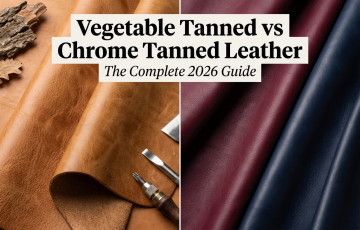
A premium, traditional leather (used by brands like Carl Friedrik, Tochigi Leather, HERZ). It develops the most dramatic patina but is the most sensitive to water and direct sunlight. Avoid harsh cleaners; use a gentle leather cream every few months.
Suede & Nubuck
⚠️ Important: NEVER use regular leather cream, mink oil, or beeswax on suede or nubuck. These will permanently flatten the nap and ruin the texture. Use only a suede brush and suede-specific cleaner. Apply a waterproofing spray made for suede before first use.
Patent Leather
The shiny, glossy finish on patent leather is a coating, not natural leather. Wipe with a soft cloth and a small amount of patent leather cleaner — never apply oils or creams.
Coated / Faux Leather
If your bag is coated leather (Saffiano, patent, or vegan/PU leather), it doesn’t need conditioning at all — just a damp cloth wipe-down. Conditioners may leave a greasy residue.
Daily Care: 30-Second Habits
The most important leather care is the smallest. These quick habits prevent 90% of long-term damage.
- Wipe down after every use. Use a soft, dry microfiber cloth to remove dust, fingerprints, and surface dirt. Takes 15 seconds. Prevents grime from settling into the grain.
- Handle with clean hands. Leather absorbs oils. Hand cream, sunscreen, and cooking oils transfer easily and stain.
- Don’t put your bag on the floor. Floors are dirty and often wet. Use a chair, a hook, or a bag stand. This single habit dramatically extends a bag’s life.
- Empty it overnight. Heavy contents stretch the leather and warp the silhouette. Empty completely if you won’t use it the next day.
- Avoid overstuffing. Leather stretches permanently when forced beyond its capacity. If you regularly need more room, you need a bigger bag — not a stretched one.
- Watch out for denim. Indigo dye from raw or new jeans transfers to light-colored leather and is nearly impossible to remove. Be especially careful with cream, beige, or natural-tan bags.
Deep Cleaning Step-by-Step
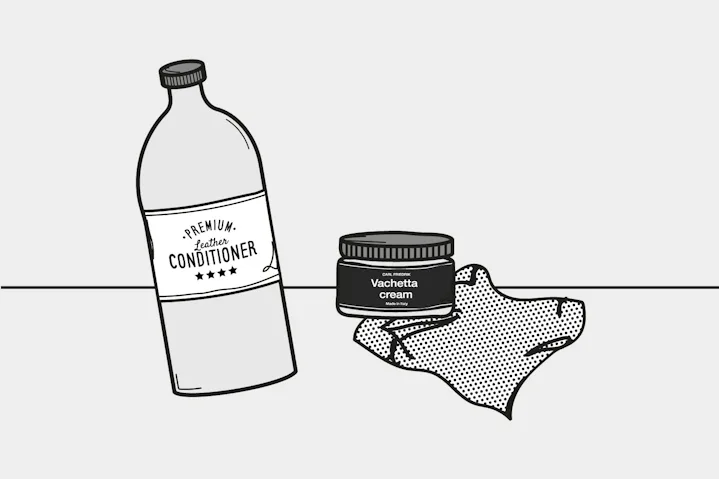
For everyday smooth leather (full-grain, top-grain, vegetable-tanned), do a thorough cleaning every 2 to 3 months for daily-use bags, or whenever the leather looks dull or feels grimy.
What you’ll need
- Two soft, lint-free microfiber cloths
- A small bowl of lukewarm water
- A drop of mild liquid soap (e.g. Marseille soap or pure castile soap) — or a dedicated leather cleaner
- Soft horsehair brush (optional, for stitching)
The 6-step process
- Empty the bag completely. Turn it inside out if possible to shake out crumbs and debris.
- Dust the surface. Use a dry microfiber cloth, then a soft brush along the seams and stitching to remove buildup.
- Make a mild cleaning solution. Mix a few drops of mild soap into lukewarm water. Avoid harsh detergents, alcohol-based products, or baby wipes — they strip the leather’s natural oils.
- Wipe gently in circular motions. Dampen (don’t soak) a cloth, wring it thoroughly, and clean small sections at a time. Never let water pool on the leather.
- Wipe with a fresh damp cloth, then a dry one. This removes any soap residue.
- Air-dry naturally. Place the bag at room temperature, away from radiators, hair dryers, and direct sunlight. Drying typically takes 2–4 hours. Don’t condition or use the bag until it’s completely dry.
💡 Pro tip: Always test any cleaner on a hidden area first (inside flap, bottom corner). What works on one leather may darken or stain another.
Conditioning: How and How Often
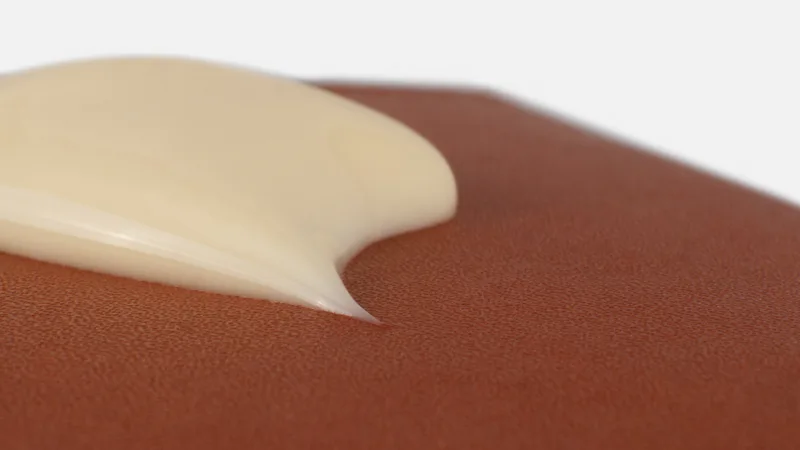
Conditioning is the single most important step for keeping leather alive. It restores the natural oils, prevents cracking, and protects against future stains.
How often should you condition?
This is one of the most misunderstood parts of leather care. Most bags need conditioning only 2–4 times per year — not weekly, not monthly. Over-conditioning is just as harmful as under-conditioning: it softens the leather’s structure, dulls the grain, and can leave a greasy residue.
- Daily-use bag: Every 3–6 months
- Occasional-use bag: Once or twice a year
- Vegetable-tanned bag: Every 3–4 months (it dries faster)
- Coated / patent / vegan leather: Never — they don’t absorb conditioner
Listen to the leather. When it looks dull, feels stiff, or shows fine surface lines, it’s time. When it still looks soft and supple, leave it alone.
How to apply conditioner
- Clean the bag first (see above) and let it dry completely.
- Apply a small amount of conditioner to a soft cloth — not directly to the leather.
- Rub gently into the leather using small circular motions, working in one section at a time.
- Let it absorb for 10–15 minutes.
- Buff off any excess with a clean, dry cloth.
- Don’t use the bag for at least 1 hour to let the product fully set.
Conditioner vs. mink oil — which should you use?
This is one of the most common questions in leather care. Both nourish leather, but they’re designed for different purposes:
- Leather conditioner (e.g. Saphir Renovateur, Leather Honey, Chamberlain’s Leather Milk, Collonil) — a balanced blend of oils and waxes formulated for everyday bag care. Light absorption, minimal darkening. Use this for fashion bags, briefcases, handbags.
- Mink oil — a heavier, deeper-penetrating oil that adds water resistance. It WILL darken leather noticeably (sometimes 1–2 shades). Best for rugged work bags, hiking gear, and weather-exposed boots. Generally too heavy for fashion bags or fine grain leathers.
- Beeswax-based balms (e.g. Otter Wax, Saphir Médaille d’Or Mink Oil Paste) — sit on the surface, add waterproofing and a soft sheen. A great middle option for bags that see rain or rough use.
💡 Default recommendation: For 90% of leather bags, a quality dedicated leather conditioner is all you need. Save mink oil for boots and weather-beaten gear.
Dealing with Common Problems
Scratches and scuffs
Light scratches on full-grain or vegetable-tanned leather often disappear with a small amount of conditioner rubbed in with your fingertip. The natural oils in your skin combined with the conditioner help “blend” the scratch into the surrounding patina. Deeper scuffs may need a tinted leather cream (Saphir Pommadier, Collonil 1909) to mask the lighter scratch underneath.
Water and rain
If your bag gets caught in the rain, do this immediately:
- Pat (don’t rub) excess water off with a soft, dry cloth.
- Stuff the bag loosely with paper towels to absorb interior moisture and keep its shape.
- Air-dry at room temperature, away from heat sources. Never use a hair dryer or radiator — fast heat shrinks and cracks leather.
- Once fully dry, apply conditioner to restore moisture.
Water spots / rings: If you see uneven dark rings after drying, lightly dampen the entire panel with a damp cloth so the moisture distributes evenly, then let it dry naturally. The water mark fades into the rest of the panel.
Grease and oil stains
For fresh grease (food, hand cream, cosmetics), sprinkle cornstarch or talcum powder generously over the stain and let it sit overnight. The powder absorbs the oil. Brush off gently the next day. Repeat if needed.
Ink stains
⚠️ Don’t try to remove ink yourself. Most home methods (alcohol, hairspray, eraser) make it worse and spread the stain. Take the bag to a professional leather restorer. If caught within minutes of contact, blot — don’t rub — with a dry cloth and consult a specialist.
Mold or mildew
If your stored bag has developed mold, wipe gently with a cloth dampened in a mixture of equal parts white vinegar and water. Air-dry thoroughly outside (in shade, not direct sun). Then condition. Improve future storage with silica gel packets and better ventilation.
How to Store Leather Bags Properly
Storage is where most people accidentally destroy their leather. Bags left empty in plastic bags, stuffed in the back of a closet, or piled on top of each other develop mold, deformation, and creases that never fully recover.
The right way to store a leather bag
- Empty it completely. Including small items, receipts, and anything heavy.
- Stuff it to maintain shape. Use acid-free tissue paper or bubble wrap. Avoid newspaper — the ink transfers. Lightly stuff; don’t over-pack.
- Wrap metal hardware in tissue paper. Buckles and clasps can leave imprints on soft leather over time.
- Use the original dust bag. Cotton dust bags allow leather to breathe. Never use plastic — it traps moisture and causes mold.
- Store upright, not stacked. Stacking deforms shape. If you must store flat, lay on a shelf without anything pressing on top.
- Add silica gel packets. They absorb moisture and prevent mold. Replace every 6 months.
- Keep away from direct sunlight. UV light fades dye and dries leather permanently.
- Air it out every 2 weeks. Take stored bags out, give them a quick wipe, let them breathe for an hour. This single habit prevents almost all storage damage.
Going on a long trip? Before storing for weeks, condition the bag, stuff it, place it in its dust bag, and add fresh silica gel. It will be in better condition when you return than if you’d left it out.
7 Things You Should NEVER Do
- ❌ Never put leather in the washing machine. Even on a gentle cycle. The result is irreversible damage.
- ❌ Never use baby wipes, alcohol, vinegar (on healthy leather), or window cleaner. They strip oils and dry out leather.
- ❌ Never dry wet leather with a hair dryer, radiator, or in direct sun. Fast heat causes shrinkage and cracking.
- ❌ Never store leather in plastic bags. Plastic traps humidity and breeds mold.
- ❌ Never apply oil/conditioner to suede, nubuck, or patent leather. It permanently flattens and stains them.
- ❌ Never over-condition. Leather can absorb only so much. Excess oil softens structure and dulls the grain.
- ❌ Never hang a leather bag by its straps for long-term storage. Gravity stretches the handles and distorts the shape.
Quick Care Schedule
If you remember nothing else, follow this simple rhythm:
- Every day: Wipe down with dry cloth, handle with clean hands, don’t put on the floor.
- Every 2 weeks: Empty completely, wipe inside, air out for an hour.
- Every 2–3 months: Deep clean with mild soap and damp cloth.
- Every 3–6 months: Condition with leather cream.
- Every season: Inspect for stitching, hardware, and lining issues. Repair early.
Recommended Care Products
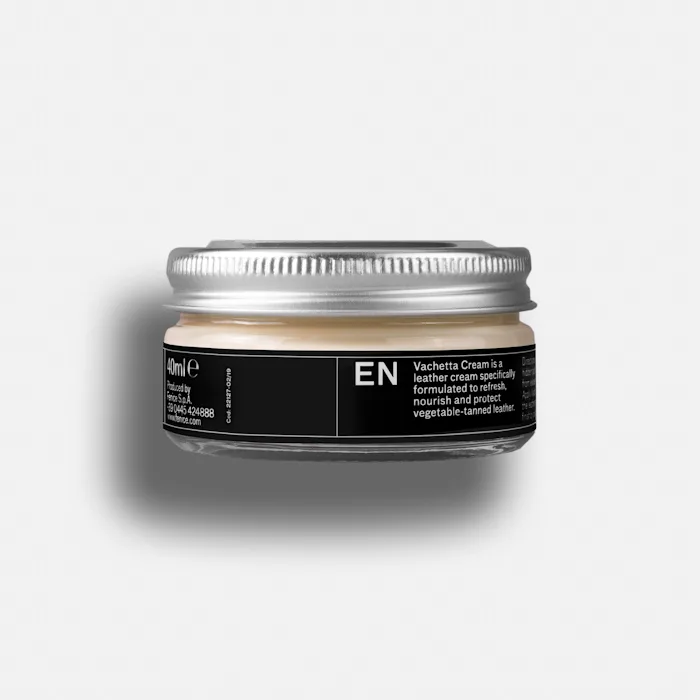
You don’t need a cabinet full of products. Here’s what actually matters:
For everyday smooth leather
- Saphir Médaille d’Or Renovateur — premium French conditioner, gentle and balanced. Search on Amazon or Rakuten.
- Collonil 1909 Supreme Cream Deluxe — German classic, used by many luxury houses. Available on Amazon and Rakuten.
- Leather Honey Conditioner — affordable, well-reviewed all-purpose conditioner. Available on Amazon.
- M.MOWBRAY Delicate Cream — a popular choice in Japan for gentle conditioning. Available on Amazon Japan and Rakuten.
For waterproofing
- Collonil Carbon Pro or Saphir Super Invulner Spray — fluorocarbon-based, doesn’t change the leather color. Search on Amazon or Rakuten.
For suede & nubuck
- Saphir Omninettoyante or Collonil Nubuck + Velour Brush — a brush plus a suede-specific cleaner is all you need. Search on Amazon or Rakuten.
Tools
- Soft horsehair brush (for buffing and cleaning seams)
- 2–3 microfiber cloths (one for cleaning, one for conditioning, one for buffing)
- Acid-free tissue paper (for storage)
- Silica gel packets (for storage)
Frequently Asked Questions
Q1. How often should I condition my leather bag?
For a daily-use bag, every 3–6 months is ideal. For an occasional-use bag, once or twice a year. The best rule is to condition when the leather looks dull, not on a fixed schedule. Over-conditioning is just as harmful as neglect.
Q2. Can I use coconut oil or olive oil on my leather bag?
No. Despite popular online tips, plant oils like coconut and olive oil eventually go rancid inside leather fibers, causing a stale smell and accelerating breakdown. Stick to dedicated leather conditioners, which are formulated specifically for the job.
Q3. My leather bag got soaked in rain — is it ruined?
Probably not. Pat it dry, stuff with paper towels, and let it air-dry naturally at room temperature (no heat sources, no direct sun). Once fully dry, apply leather conditioner to restore moisture. Most rain-soaked bags recover completely with this method, though some may show light water marks that fade with use.
Q4. What’s the difference between leather conditioner and mink oil?
Leather conditioner is a balanced product designed to nourish leather without dramatically changing its appearance — perfect for fashion bags. Mink oil penetrates more deeply, adds water resistance, and noticeably darkens leather — better for work boots and rugged outdoor gear. For most bags, use a leather conditioner.
Q5. Will conditioner darken my bag?
A small amount of darkening is normal immediately after applying — it usually lightens back within 24–48 hours as the product absorbs. Mink oil and beeswax-heavy products darken more permanently. Always test on a hidden spot first, especially with light-colored leather (cream, beige, natural tan).
Q6. How do I get the smell out of a musty stored leather bag?
Place an open box of baking soda or activated charcoal inside the bag and leave it in a well-ventilated area for a few days. For more stubborn odors, leave the bag outside in shaded fresh air for 24–48 hours. Avoid spraying perfume or air freshener on leather — it stains.
Q7. Should I waterproof my leather bag?
Yes, especially before first use — and yes, especially for light-colored, vegetable-tanned, or suede leather. Use a fluorocarbon-based leather waterproofing spray (like Collonil Carbon Pro or Saphir Super Invulner). Apply a thin, even mist from about 25–30 cm away, let dry overnight, and reapply every few months. It won’t change the color of your bag.
Q8. Can I restore a cracked leather bag?
Surface cracks (fine lines from dryness) often improve significantly with deep conditioning over a few weeks — apply a small amount of conditioner, let it absorb, repeat after 1–2 weeks. Deep, structural cracks where the leather has split cannot be fully repaired and require a professional leather restorer. Prevention is far easier than cure.
Final Thoughts
Caring for a leather bag isn’t complicated — it just requires consistency. Wipe it daily, clean it every few months, condition it 2–4 times a year, and store it in a breathable dust bag. That’s the entire routine. Do those four things, and your leather bag will not only last for decades but actually become more beautiful with age.
Real leather is one of the few materials that genuinely improves with use. The scratches, color shifts, and softening that develop over time aren’t damage — they’re character. With proper care, your bag becomes uniquely yours. Treat it well, and it will outlast trends, seasons, and most of the things in your wardrobe.