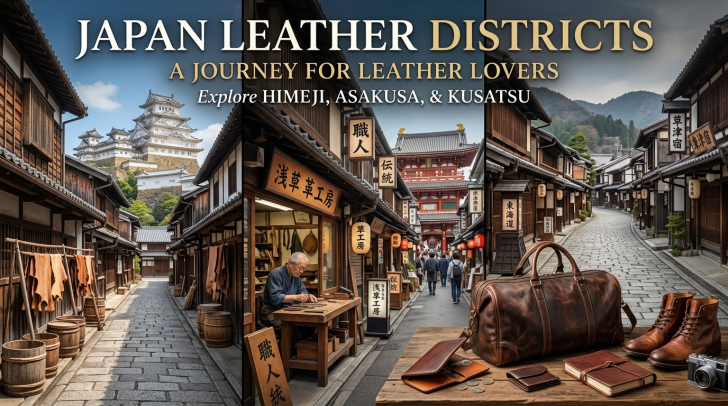
Japan is one of the world’s most remarkable — and least-known — destinations for leather lovers. From ancient white-tanning workshops in Himeji to the buzzing artisan alleyways of Asakusa, and the classic post-town character of Kusatsu on the road between Kyoto and Edo, this guide takes you through the regions where Japanese leather culture was born and still thrives today. Whether you’re hunting for the perfect handcrafted wallet, hoping to witness a tannery in action, or simply want to understand why Japanese leather commands such global respect, this itinerary is built for you.
Pack your most comfortable shoes (leather, naturally), set aside a few days, and prepare to discover a side of Japan that most tourists never see.
📋 Table of Contents
- 🌏 Why Japan Is a Leather Lover’s Dream Destination
- 🏯 Himeji: Japan’s Sacred Ground of Leather
- 🧵 Asakusa: Tokyo’s Living Leather Town
- 🛤️ Kusatsu: A Historic Base for Kansai Leather Exploration
- 🛍️ What to Buy: A Visitor’s Guide to Japanese Leather Goods
- ✅ Practical Travel Tips for Japan’s Leather Districts
- 🗓️ Sample 4-Day Leather-Focused Japan Itinerary
- ❓ Frequently Asked Questions (FAQ)
🌏 Why Japan Is a Leather Lover’s Dream Destination
When people think of world-class leather, Italy and France tend to dominate the conversation. But Japan’s leather heritage stretches back over 2,000 years — a tradition first introduced by craftsmen from the Korean Peninsula and refined across centuries of samurai culture, Shinto ritual, and Meiji-era modernization.
Today, Japan is home to some of the most technically accomplished tanneries and leather craftspeople anywhere in the world. The country’s leather districts are concentrated in a handful of regions — each with its own distinct techniques, materials, and character. Visiting them isn’t just shopping; it’s a journey into living craft history.
🏯 Himeji (Hyogo)
Japan’s white leather capital. Over 1,000 years of tanning tradition. Accounts for ~70% of domestic cowhide production.
🧵 Asakusa (Tokyo)
Tokyo’s historic “Leather Town.” Over 100 shoe factories, generations of bag makers, and a world-first Leather Industry Museum.
🛤️ Kusatsu (Shiga)
A historic post town on the old Tokaido highway, near Kyoto. Perfect base for exploring the Kansai leather region and visiting Himeji.
🏯 Himeji: Japan’s Sacred Ground of Leather
A 1,000-Year Tanning Legacy
No journey through Japan’s leather world is complete without spending time in Himeji. This castle city in Hyogo Prefecture is, without question, the birthplace of Japanese leather. Its tanning history is documented in the Engishiki, a 10th-century collection of governmental regulations, placing Himeji at the center of Japan’s leather industry for over a thousand years.
The region’s geography made it ideal for tanning. The Ichikawa River provided pure, slow-moving water rich with natural bacteria. The Seto Inland Sea climate — warm and dry — was perfect for sun-bleaching hides. Salt was abundant from nearby coastal production. Cattle were plentiful across western Japan. All of this converged to make the Himeji/Tatsuno area the country’s leather heartland, a position it still holds today, producing approximately 70% of all domestic cowhide in Japan.
Shironameshi: The Ancient Art of White Leather
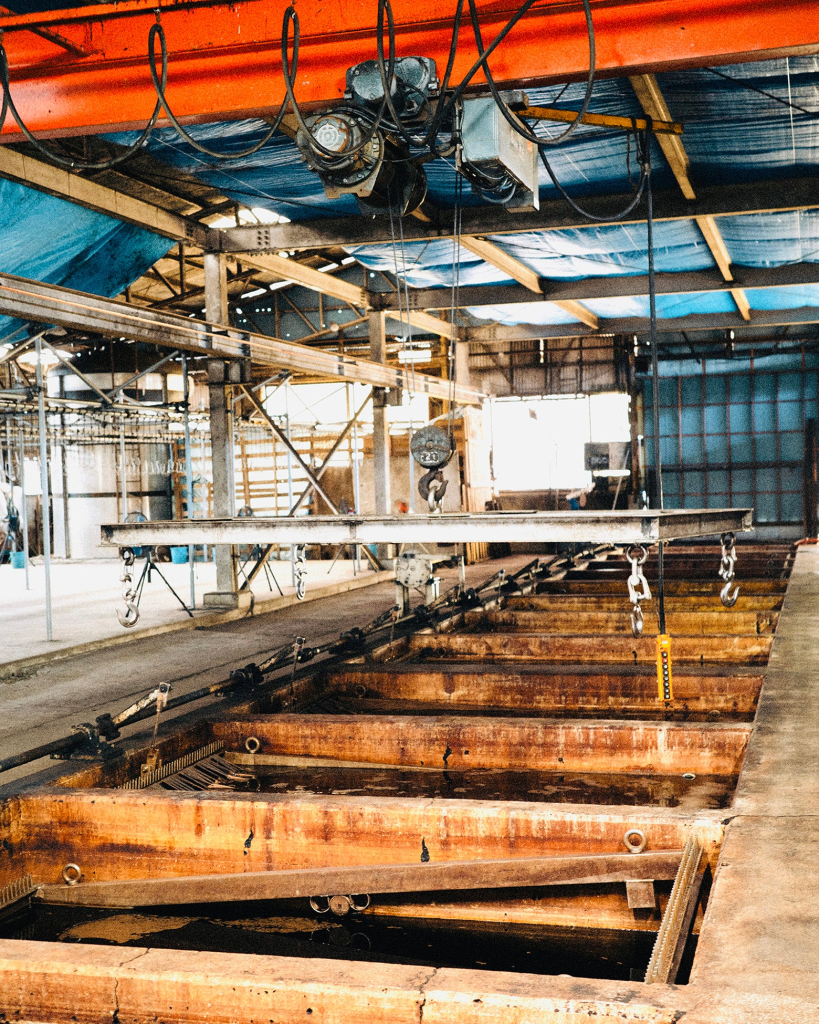
The most celebrated craft unique to Himeji is Shironameshi (白なめし) — white-tanned leather. Unlike virtually any other tanning method in the world, Shironameshi uses no chemicals whatsoever. The process relies on three natural ingredients: bacteria from the Ichikawa River, salt, and rapeseed oil. Hides are soaked in river water, treated with salt, and rubbed with canola oil before being stretched and sun-dried. The result is a striking milky-white leather with exceptional toughness.
This technique takes two to four months to complete — far longer than modern chrome tanning, which can be done in weeks. At one point, the tradition was nearly extinct, with few craftsmen willing to endure the labor-intensive process. Today, thanks to a small group of dedicated artisans and growing awareness of its cultural value, Shironameshi is experiencing a quiet revival. The leather’s historical uses were significant: samurai wore it in their armor, it was stretched over drums, and it was presented as offerings at Shinto shrines.
What to See & Do in Himeji’s Leather District
Sanyo Leather Co., Ltd. (三陽皮革) is one of the most important tanneries you can visit in Japan. Founded in 1911 at its current location and rooted in the original Himeji Leather Plant, Sanyo is the only tannery in Japan capable of performing three tanning methods: chrome, tannin, and white leather tanning. They opened a public Leather Gallery on their premises in 2015 and even sell leather in small lots to hobbyists and visitors. Their consumer brand TAANNERR (launched 2022) brings their finest hides directly to the public in the form of premium leather accessories.
Hime Usagi (姫兎) is a curated leather goods shop near Himeji Station where you can purchase products sewn from locally tanned leather. They also offer workshops where visitors can engrave their names into Himeji leather or try leather origami. This is an ideal stop if you want to take home an authentic Himeji leather souvenir with a story behind it.
Himeji Leatherwork Honpo (大野姫路レザーワーク本舗), located five minutes from JR Himeji Station in the Omizo-suji shopping district, offers a wide selection of handcrafted white leather goods — eyeglass cases, card cases, small leather accessories — all made by in-house craftsmen. Many customers travel from other prefectures specifically to shop here.
BAIMO Leather Studio is a training center established to ensure the next generation of Himeji leather craftspeople. Graduates of the program produce goods sold at local shops, keeping the tradition alive through education.
Don’t miss the nearby town of Tatsuno, just a short drive from Himeji, where tanneries line the banks of the Hayashita River. Nakashima Leather’s shop-and-workshop here lets you observe young craftsmen at work — a genuinely moving experience. The town is also famous for soy sauce and somen noodles, so a lunch stop is an easy way to round out a full day.
Himeji Leather District: Practical Information
| Item | Details |
|---|---|
| Getting There | From Osaka: ~40 min by Shinkansen to JR Himeji Station. From Kyoto: ~1 hr by express train. |
| Best Time to Visit | Spring (March–May) or Autumn (Oct–Nov). Summer is very hot and humid. |
| Combined Sightseeing | Himeji Castle (UNESCO World Heritage) is a 15-min walk from the station. Combine leather shopping with castle sightseeing easily. |
| Official Info | Visit Himeji — Leather Products |
| Tax-Free Shopping | Available at many shops with passport. Look for the Japan Leather label for certified quality. |
🧵 Asakusa: Tokyo’s Living Leather Town
The Other Asakusa
Most visitors to Asakusa come for Senso-ji Temple, the Nakamise shopping street, and the atmospheric rickshaws gliding through narrow lanes. But venture away from the tourist flow — north into Moto-Asakusa, west into Oku-Asakusa, or across to nearby Kuramae — and you’ll find a completely different city: a dense network of leather workshops, shoe factories, bag ateliers, and boutiques that has been quietly running for over a century.
Asakusa is home to approximately 100 shoe factories, along with countless leather goods workshops and artisan studios. This is Tokyo’s craft heartland, sometimes called the “East Side” leather district. The tradition of bag and leather goods making here flourished during the Edo period and has been handed down generation by generation through to the Reiwa era today.
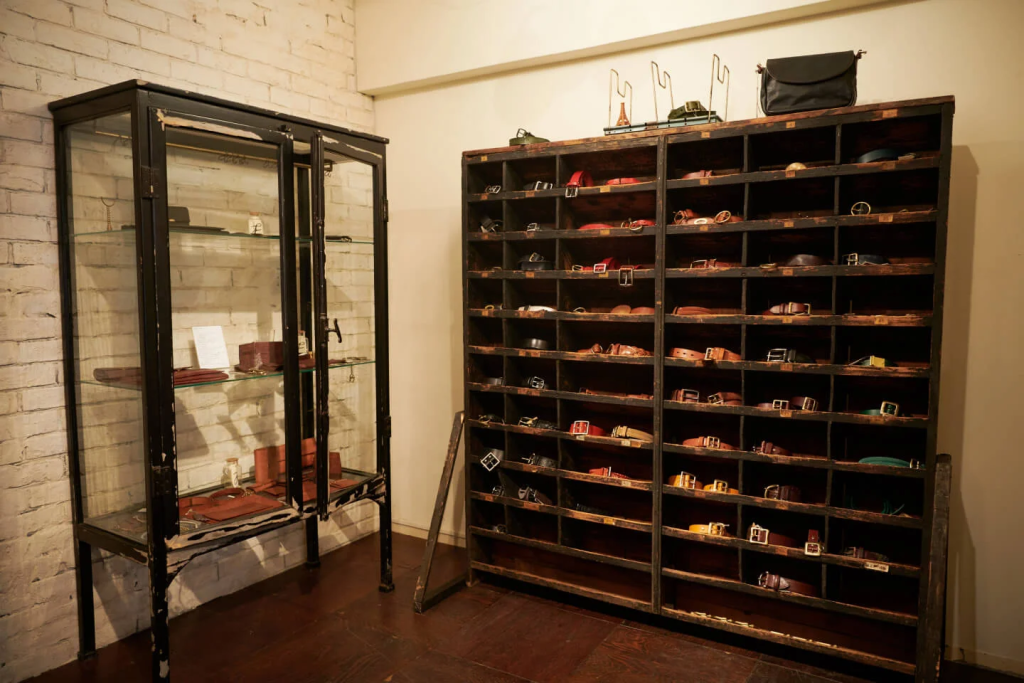
Key Stops in Asakusa’s Leather Scene
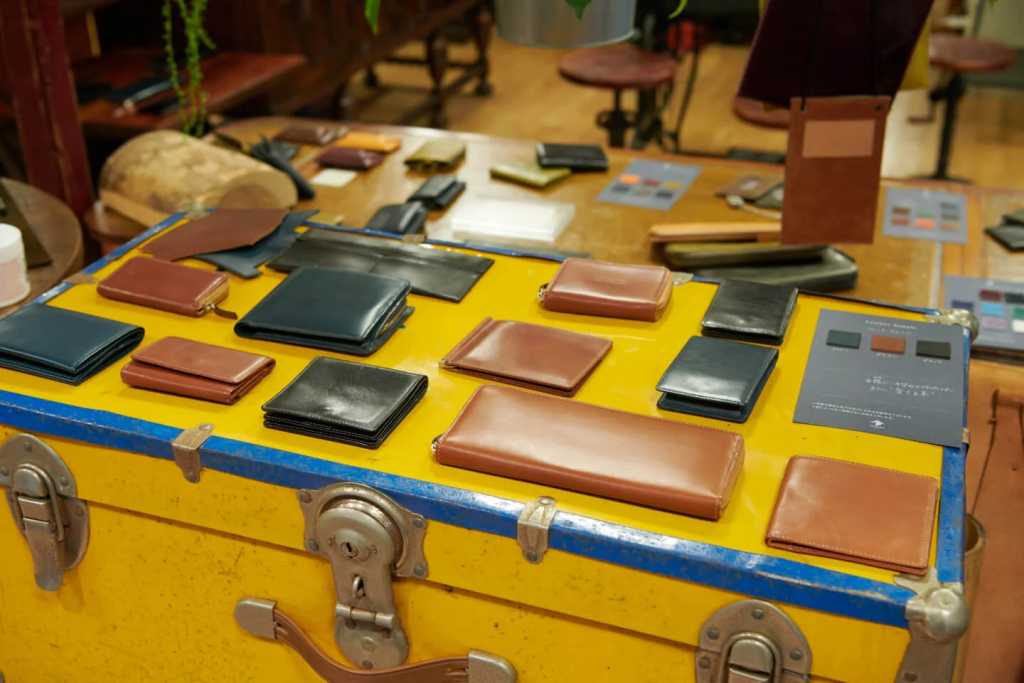
YAMATOU (山東) — Founded in 1899, this is one of Asakusa’s most celebrated leather goods makers. The atelier on Moto-Asakusa doubles as a retail space, and visiting means walking among the rhythmic sounds of wallet-making machinery that dates back over a century. Their signature “buffing series” uses four layers of Tochigi-tanned leather with pigment dye, creating goods that develop extraordinary patina with age. Tax-free shopping is available — bring your passport. Official site →
Kanmi. (かんみ) — A beloved Asakusa leather brand known for handcrafted wallets, key cases, and distinctive “gamaguchi” (frog-mouth clasp) pouches. All products are made one by one by skilled Tokyo craftsmen. The shop is near Kaminarimon and is a popular stop for visitors looking for uniquely Japanese leather gifts. Official site →
The Leather Industry Museum (革の産業博物館) — Located north of Senso-ji along the Sumida River, this is the world’s first museum dedicated entirely to the leather industry. Exhibits trace the history of leather goods from the Edo period through to modern athletic wear. Free or low-cost entry makes this a perfect first stop to orient yourself before shopping. Admission information via Go Tokyo →
Kuramae (蔵前) — If Asakusa is the veteran district, Kuramae is its younger, more design-forward sibling. Located between Asakusa and Asakusabashi, this area along the Sumida River is home to a new wave of craftspeople blending traditional Japanese techniques with modern aesthetics. Brands like carmine offer fun leather accessories with contemporary color stories, while Sukima Kappabashi produces timeless single-color leather goods from shoes and wallets to notebook covers. An afternoon here pairs perfectly with coffee at one of the neighborhood’s many specialty cafés.
2K540 AKI-OKA ARTISAN — Under the elevated JR tracks between Akihabara and Okachimachi lies one of Tokyo’s most charming artisan shopping streets. Several leather ateliers operate here, many with open workshop windows where you can watch makers at work. It’s one of the best spots in the city to find handmade leather goods directly from the craftsperson who made them.
Tokyo Shoe Culture: Asakusa’s Hidden World of Bespoke Footwear
Asakusa isn’t just about wallets and bags. With around 100 shoe factories in the area, this is also the capital of Japanese artisan shoemaking. Three standout shops are worth knowing:
Tokyo Kimono Shoes fuses genuine leather with recycled kimono fabrics to create distinctively Japanese sneakers. Each pair is unique since the kimono cuts differ every time. This is sustainable, culturally rich footwear that makes for an extraordinary souvenir.
U-DOT specializes in highly customizable shoes — customers select their own materials, colors, and hardware. Every shoe is cut from a single piece of leather and entirely handmade. Even J-rock band YOASOBI have had custom pairs made here.
2212 Shoes is part shoe store, part cocktail bar, part gallery — occupying two floors near Asakusa Station. Their collection focuses on quality leather boots and dress shoes, many available in made-to-measure. Goodyear welt and Blake stitch construction means these shoes can be resoled and worn for decades.
Asakusa Leather District: Practical Information
| Item | Details |
|---|---|
| Getting There | Asakusa Station (Tokyo Metro Ginza Line or Toei Asakusa Line). Kuramae Station 10 min walk. Shin-Okachimachi Station for Moto-Asakusa. |
| Best Route | Start at Leather Industry Museum → YAMATOU → Kanmi. → walk to Kuramae → end at 2K540 AKI-OKA ARTISAN. |
| Full Day or Half Day? | Allow a full day to cover Asakusa and Kuramae comfortably. Half day minimum for core spots only. |
| Shopping Tip | Most small workshops are closed Sat/Sun. Weekday visits give the best access and chances to see craftsmen at work. |
| Official Guide | Japan Leather Journal — Asakusa Leather Town Walk |
🛤️ Kusatsu: A Historic Base for Kansai Leather Exploration
Kusatsu-juku: The Post Town at the Crossroads
Kusatsu (草津市) in Shiga Prefecture occupies a unique position in Japanese travel history. During the Edo period, it stood at the junction of the Tokaido and Nakasendo highways — the two great routes connecting Edo (Tokyo) with Kyoto and Osaka. The town’s Honjin (official inn) still stands today as a nationally designated Important Cultural Property and is open to the public. Kusatsu is not itself a leather production center, but its location makes it an exceptional base for leather-focused travel through the Kansai region.
From Kusatsu, Himeji is approximately 90 minutes by train via Osaka. Kyoto is just 15 minutes away, and Osaka about 30 minutes. This makes Kusatsu an ideal hub for multi-day itineraries that combine leather district visits with broader Kansai sightseeing. Lake Biwa — Japan’s largest lake — is also minutes away, and the Kusatsu City government has been actively developing local craft tourism, including the “Kusatsu Brand” certification program for locally made goods.
If you’re planning a Kansai leather trip and want to avoid the higher costs and crowds of central Kyoto hotels, Kusatsu offers excellent transport connections, a quieter atmosphere, and genuine historic character. The Kusatsujuku Honjin (草津宿本陣) is well worth a morning visit before heading to Himeji for a day of leather exploration.
Nearby: Wakayama — Japan’s Third Great Leather Region
While based in the Kansai area, consider a detour to Wakayama, the third of Japan’s great leather-producing regions (alongside Himeji and Asakusa). Wakayama’s leather history dates to the Muromachi period, and the tanneries here collaborate unusually closely — sharing information, technology, and even trade show appearances as “Team Wakayama.” Their Kinokuni Leather branding initiative certifies the finest locally processed leather, and you can find bags and accessories made from it in select shops throughout the region. Wakayama is about 1 hour from Kusatsu by train.
🛍️ What to Buy: A Visitor’s Guide to Japanese Leather Goods
Japanese leather goods are celebrated worldwide for their precision construction, thoughtful design, and extraordinary longevity. Here’s what to look for — and a few recommended products — when shopping at Japan’s leather districts.
Wallets & Small Leather Goods
The long bifold wallet (長財布, nagasaif u) is a Japanese classic. Look for full-grain, vegetable-tanned leather — often from Tochigi or Himeji — with hand-stitched edges. Brands like GANZO, YAMATOU, and mic set the standard for quality. Many use leather so supple it seems impossible until you hold it.
Recommended products:
- GANZO シェルコードバン長財布 — Premium shell cordovan long wallet. Search on Amazon Japan | Rakuten
- 栃木レザー 二つ折り財布 (Tochigi Leather Bifold Wallet) — Classic vegetable-tanned. Search on Amazon Japan | Rakuten
- 姫路レザー 名刺入れ (Himeji Leather Card Case) — Compact and distinctive. Search on Amazon Japan | Rakuten
Bags
Toyooka (Hyogo Prefecture, near Himeji) produces an estimated 70% of all bags made in Japan. The craftsmanship here is impeccable. Leather tote bags and briefcases from this region combine clean minimalist design with structural precision. The brand No,No,Yes! from Himeji is available in over 100 select stores in Japan and internationally.
Recommended products:
- 姫路レザー トートバッグ (Himeji Leather Tote Bag) — Search on Amazon Japan | Rakuten
- PORTER ブリーフケース (Porter Briefcase) — Tokyo-made. Search on Amazon Japan | Rakuten
Shoes
Asakusa-made shoes represent some of the finest Japanese footwear you’ll find. Look for Goodyear welt construction (allows resoling), full-grain leather uppers, and handmade finishing. Bespoke or made-to-order options are widely available.
Recommended products:
- 日本製 グッドイヤーウェルト 革靴 (Japanese Goodyear Welt Leather Shoes) — Search on Amazon Japan | Rakuten
✅ Practical Travel Tips for Japan’s Leather Districts
Tax-Free Shopping: Bring your passport. Many leather shops in Himeji and Asakusa offer 10% consumption tax exemption for overseas visitors on purchases over ¥5,000. The Japan Leather label (a certification from the Tanners’ Council of Japan) guarantees the product is Made in Japan from verified quality leather.
Workshop Visits: Tannery visits in Himeji (especially Sanyo) are best arranged by contacting the company directly in advance. Some open factory events are held seasonally. Tochigi Leather (near Tokyo) is famous for its annual open-factory days where visitors can see the full tanning process.
Leather Craft Experiences: Leather craft workshops are available across all three districts. In Himeji, try the name-engraving workshop at Hime Usagi. In Asakusa, YAMATOU and other brands offer hands-on crafting sessions. In Tokyo overall, Activity Japan lists dozens of bookable leather craft experiences. Browse options here →
Language: Most shops in tourist-focused areas have English support or at least English signage. In more artisan-focused neighborhoods, Google Translate’s camera function is extremely useful. Many craftspeople will demonstrate their work even without shared language — the gestures speak for themselves.
Budgeting: Quality Japanese leather goods range from ¥5,000 for small items to ¥50,000+ for premium bags and shoes. Bespoke shoemaking can run significantly higher. Budget around ¥15,000–¥30,000 per person for a meaningful shopping experience in any district.
🗓️ Sample 4-Day Leather-Focused Japan Itinerary
Here’s a suggested itinerary combining all three destinations with maximum leather immersion:
| Day | Location | Highlights |
|---|---|---|
| Day 1 | Arrive Tokyo / Asakusa | Leather Industry Museum, YAMATOU atelier, Kanmi. shop, dinner in Asakusa |
| Day 2 | Asakusa → Kuramae → 2K540 | Kuramae boutiques, carmine & Sukima Kappabashi, shoe shopping at 2212 Shoes or U-DOT |
| Day 3 | Shinkansen to Himeji (via Kusatsu overnight) | Himeji Castle + Himeji leather district: Sanyo Gallery, Hime Usagi workshop, Tatsuno tannery walk |
| Day 4 | Kusatsu → Kyoto / Osaka departure | Kusatsujuku Honjin, morning market, Lake Biwa scenic stop, onward journey |
❓ Frequently Asked Questions (FAQ)
Is it possible to visit a tannery in Himeji as a tourist?
Yes, though advance arrangements are recommended. Sanyo Leather’s Leather Gallery is open to visitors, and the company sometimes hosts open-factory events. For a more structured visit, reaching out in advance via their official channels is the best approach. Some local tour operators also organize leather district tours including tannery access.
What is the best Japanese leather brand to buy from?
It depends on your priorities. For wallets and small goods, GANZO, YAMATOU, and mic are consistently excellent. For bags, Porter (Yoshida & Co.) and the various Toyooka-origin brands offer outstanding quality. For the rarest, most historically significant leather, seek out pieces made with Himeji Shironameshi or Koshu Inden deer leather from Yamanashi. Look for the Japan Leather label for certified domestic production.
Can I ship Japanese leather goods internationally?
Yes. Most shops ship internationally, though some smaller ateliers may only ship domestically. Brands like Kanmi. use third-party services like WorldShopping for international delivery. It’s worth asking at each shop — many have gained international clientele over recent years and are well set up for overseas shipping.
What makes Japanese leather different from Italian or English leather?
Japanese leather is distinguished by its meticulous quality control, precision tanning processes, and the philosophical approach to craftsmanship (monozukuri — the art of making things). Himeji’s white-tanning technique is unique in the world. Tochigi Leather’s full-vegetable tanning produces exceptionally dense, firm leather with legendary aging properties. Where Italian leather often emphasizes suppleness and color, Japanese leather tends toward durability, structural integrity, and a quieter aesthetic. Neither is objectively superior — they reflect different traditions and priorities.
Is Kusatsu in Shiga the same as Kusatsu Onsen?
No — these are two different places with the same name. Kusatsu Onsen (草津温泉) is in Gunma Prefecture and is famous for its hot springs. Kusatsu City (草津市) in Shiga Prefecture is the historic post town near Lake Biwa described in this article. Both are worth visiting for completely different reasons! If you’re doing a leather journey through Kansai, Kusatsu (Shiga) is the relevant destination.
Are leather craft workshops available in English?
Yes, increasingly so. Workshops in Himeji (Hime Usagi), Asakusa (multiple operators), and across Tokyo are offering English-language options, especially since the 2020s. Activity Japan’s English platform lists many bookable options. YAMATOU’s Kagurazaka location also hosts English-accessible workshops — check their website for schedules.
This article contains affiliate links. Purchases made through these links may support the site at no additional cost to you. All recommendations are based on independent research and editorial judgment.
📚 Related Articles
・Tochigi vs Himeji Leather
・The Beginner’s Guide to Buying Japanese Leather Goods
・Shell Cordovan from Japan: Shinki Hikaku
▎ 編集部からのお願い
こんな革製品が欲しい、というご要望ありませんか?
Leather Noteでは公式ショップで取り扱う革製品の企画を進めています。「こういうアイテムが本革で欲しい」というアイデアやリクエストがありましたら、ぜひ気軽にお寄せください。
記事の感想やご意見も同フォームから受け付けています。